
Your SAP system works perfectly at headquarters. So why does it feel like a lead weight at your subsidiaries?
If you’re a CIO or CFO, you know the feeling. You’ve invested millions into a Tier-1 SAP environment to gain “total visibility.” Yet, your regional offices are still running on spreadsheets, your plant managers are complaining about “clunky” interfaces, and your licensing costs are spiraling out of control.
At Indictrans, we see this daily. What we consistently see across enterprise rollouts and subsidiary operations is that it’s clear that the “SAP Everywhere” dream has become an operational nightmare for the modern enterprise.
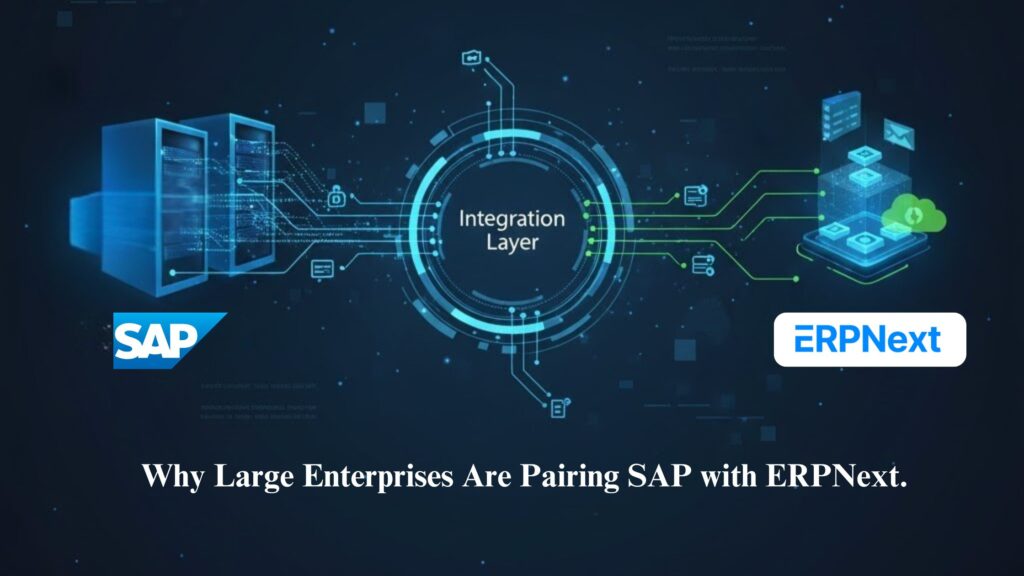
The most successful global players aren’t forcing SAP into every corner of their business anymore. Instead, they are adopting a Two-Tier ERP Strategy: keeping SAP at the core for governance, while deploying ERPNext at the edge for speed and agility.
Read the full LinkedIn post to see how Success package stabilized ERPNext operations.
What Is a Two-Tier ERP Strategy?
A two-tier ERP strategy uses:
- Tier 1 ERP (SAP) at headquarters
- Tier 2 ERP (ERPNext) for subsidiaries, plants, and satellite offices
Instead of replacing SAP, enterprises extend their ERP ecosystem intelligently.
- SAP continues to manage group finance, consolidation, audit, and governance
- ERPNext handles day-to-day operations, where speed, simplicity, and cost efficiency matter most
The result: HQ-level control with operational agility on the ground.
Why “SAP Everywhere” No Longer Works
1. Subsidiaries Perform Better with Right-Sized ERP Systems
- A 200-300-user plant operates very differently from a global headquarters.
It needs speed and simplicity, not layers of controls designed for large corporate teams. - High license costs
SAP’s licensing model is built for large user bases, making it disproportionately expensive for small units. - Heavy consulting dependencies
Even small changes require specialized SAP consultants, increasing long-term dependency and cost. - Long implementation timelines
SAP rollouts involve complex blueprinting and testing, which slows down subsidiaries that need quick execution.
Result: Cost-to-value mismatch
Subsidiaries end up paying enterprise-level costs without receiving proportional operational value.
2. Slow Rollouts Delay Business Growth
- Typical SAP rollouts for smaller units take 6-12 months, delaying operational readiness.
- By the time SAP goes live, business processes may have already changed, forcing rework or workarounds.
- In contrast, ERPNext implementations usually go live in 6-10 weeks, allowing new plants or offices to stabilize quickly and support faster expansion.
3. Poor Adoption Silently Destroys ERP ROI
When ERP systems feel too complex or rigid, users avoid them in daily work.
- Spreadsheets
Teams maintain Excel files outside the ERP, leading to fragmented and unreliable data. - Manual workarounds
Processes move offline, increasing errors and reducing traceability. - Delayed data entry
Late or incomplete data reduces real-time visibility and decision-making accuracy.
ERPNext’s clean interface and role-based workflows improve adoption, especially for operations and shop-floor teams, ensuring ERP data reflects real business activity.
Why Indictrans Recommends ERPNext along with the existing SAP
Indictrans is not only Frappe Partners but Frappe Certified Gold Partner In Global Market with hands-on experience in building ERP architectures that work after go-live, not just during implementation.
Our recommendation of ERPNext as a Tier-2 ERP is based on real operational outcomes across subsidiaries and plants.
1. Cost-Effective Subsidiary Rollout
ERPNext is designed to be economical for smaller and mid-sized operational units.
- No per-user license fees
Subsidiaries can add users freely without worrying about rising license costs. - Lower infrastructure costs
ERPNext runs efficiently without heavy hardware or complex system landscapes. - Predictable implementation budgets
Clear scope and simpler architecture prevent unexpected cost overruns.
Result: Enterprises typically save 40-60% on ERP costs at the subsidiary level.
2. Functional Depth Without Overengineering
ERPNext provides all the essential functionality needed to run subsidiary operations smoothly.
- Accounting & compliance
Supports local accounting, statutory needs, and financial discipline. - Inventory & manufacturing
Enables real-time stock control, production planning, and shop-floor visibility. - Asset management
Tracks asset lifecycle, maintenance, and utilization at plants. - HR & payroll
Manages attendance, payroll, and employee records without external tools.
All this is delivered without unnecessary complexity, ensuring faster adoption and smoother daily use.
3. Customization Without Lock-In
Indictrans builds ERPNext solutions that adapt as the business evolves.
- Upgrade-safe custom apps
Customizations are built without touching core code, keeping upgrades smooth. - Configurable workflows
Business processes can be adjusted easily as operations change. - Business-aligned reports
Reports reflect how teams actually work, not generic ERP templates.
Outcome: ERPNext grows with the business without breaking future upgrades.
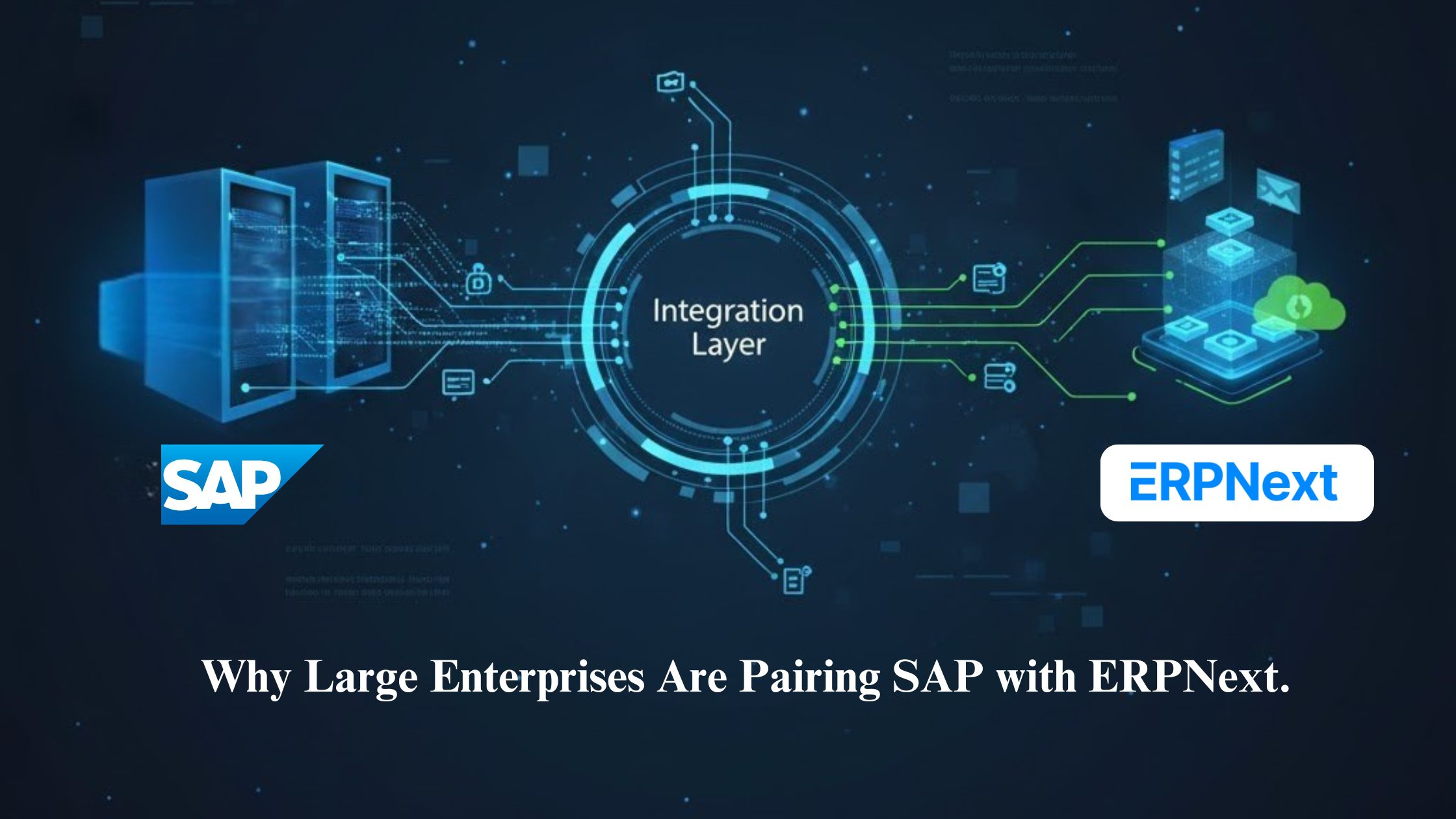
SAP-ERPNext Integration: Indictrans’ Proven Model
A two-tier ERP strategy only works when systems are integrated cleanly, without creating data silos or duplication.
At Indictrans Technologies, integration is designed with a clear role definition, not ad-hoc data syncing.
Guiding Principle
- SAP remains the system of record
SAP holds the final, authoritative financial and compliance data for the group. - ERPNext becomes the system of execution
ERPNext handles day-to-day transactions where speed and flexibility are required.
This separation avoids confusion, overlap, and reporting conflicts.
Typical Integration Scope
- Master data sync (Items, Customers, Vendors)
Ensures core business data is consistent across SAP and ERPNext, preventing duplication or mismatch. - Periodic financial summaries from ERPNext to SAP
Subsidiary-level financial data flows to HQ without pushing transactional load onto SAP. - Trial balance and GL mapping for consolidation
Aligns subsidiary accounts with SAP’s chart of accounts for accurate group reporting. - Secure API or middleware-based data exchange
Enables controlled, auditable, and reliable data transfer between systems.
Outcome: Leadership gets centralized visibility, while subsidiaries retain operational independence.
Business Value for Leadership Teams
For CFOs
- Lower total cost of ownership
Reduces SAP licensing and implementation costs at subsidiaries. - Faster ROI from new entities
Faster ERP rollouts mean financial visibility and control from day one. - Reliable consolidated reporting
Clean, structured data improves the accuracy of group financial statements.
For CIOs
- Reduced pressure to customize SAP
SAP remains stable at HQ without constant modifications for local needs. - Faster ERP deployments
Subsidiaries can go live quickly without waiting for SAP rollout cycles. - A scalable, future-ready ERP architecture
The ERP landscape can grow without becoming complex or brittle.
Rule of thumb: If data is operational, it lives in ERPNext. If data is statutory or consolidated, it lives in SAP.
For Business Heads
- Faster operational readiness
Systems are ready when plants or offices start operations. - Higher system adoption
Simple workflows encourage teams to actually use the ERP. - ERP that matches real workflows
ERP supports daily work instead of forcing unnatural processes.
When a Two-Tier ERP Strategy Makes Sense
Indictrans typically recommends SAP + ERPNext when organizations have:
- Multiple subsidiaries with varying maturity
Each entity gets an ERP suited to its size and complexity. - Manufacturing plants with lean teams
Lightweight ERP avoids slowing down production and operations. - Overseas or regional expansions
Faster ERP deployment supports quicker market entry. - Growth through mergers and acquisitions
Acquired entities can be integrated quickly without SAP overload.
If SAP is slowing growth outside HQ, a two-tier ERP model becomes a strategic necessity, not an option.
Why Enterprises Choose Indictrans
What differentiates Indictrans is not just ERPNext expertise it’s a business-first ERP mindset.
What Indictrans Focuses On
- Long-term ERP architecture
ERP decisions are made with future growth in mind, not short-term fixes. - Upgrade-safe implementations
Customizations don’t block future ERP upgrades. - Post go-live stabilization through HyperCare
Focuses on adoption, performance, and issue resolution after launch. - Continuous improvement, not one-time delivery
ERP evolves as business processes evolve.
Final Takeaway: Control at the Core. Agility Together with a Two-Tier ERP Strategy.
Large enterprises are not failing because SAP is inadequate. In fact, SAP continues to be the right choice for headquarters, where financial consolidation, compliance, auditability, and governance are non-negotiable. The real challenge begins when the same enterprise-grade ERP is forced onto subsidiaries, manufacturing plants, and regional offices that operate with very different realities, lean teams, faster decision cycles, and a stronger need for simplicity and speed.
This is where the two-tier ERP strategy emerges as a practical and future-ready approach. By retaining SAP at the core and deploying ERPNext at the operational edge, enterprises avoid the cost-to-value mismatch caused by “SAP everywhere.” Subsidiaries no longer carry the burden of high license fees, long rollout timelines, and complex workflows. Instead, they gain a system that supports daily execution, improves adoption, and stabilizes operations quickly, often in weeks rather than months.
What makes this strategy truly effective is clean integration and clear role separation. SAP remains the single source of truth for group finance and reporting, while ERPNext acts as the system of execution for transactions and local operations. Master data synchronization, financial summaries, and trial balance consolidation ensure leadership retains complete visibility without slowing down the business. This architecture delivers measurable value across roles: CFOs gain lower total cost of ownership and reliable consolidated reporting, CIOs benefit from reduced customization pressure and a scalable ERP landscape, and business heads see faster readiness and higher system adoption on the ground.
At Indictrans Technologies, this approach is not treated as a workaround but as a long-term ERP architecture decision. Indictrans’s focus on upgrade-safe implementations, post go-live stabilization through HyperCare, and continuous improvement ensures that ERP systems continue to support the business long after go-live. The result is not just a successful implementation, but an ERP ecosystem that evolves with growth, expansion, and change.
In essence, a two-tier ERP strategy allows enterprises to stop choosing between control and agility.
SAP delivers stability at the core.ERPNext delivers speed and efficiency at the edges. For organizations where SAP is slowing growth outside headquarters, adopting a two-tier ERP model is no longer optional; it is a strategic necessity for sustainable scale.
Need guidance on SAP plus ERPNext Implimentation? Speak with an expert and get clarity fast.