
The retail industry has changed significantly over the last few years. Customers today expect seamless shopping experiences, real-time product availability, faster billing, personalized engagement, and consistent service across both online and offline channels.
At the same time, retailers are managing increasing operational complexity—inventory mismatches, disconnected systems, delayed order fulfillment, and rising customer expectations.
Traditional retail management methods are no longer enough to support modern retail operations.
This is where retail technology solutions play a critical role.
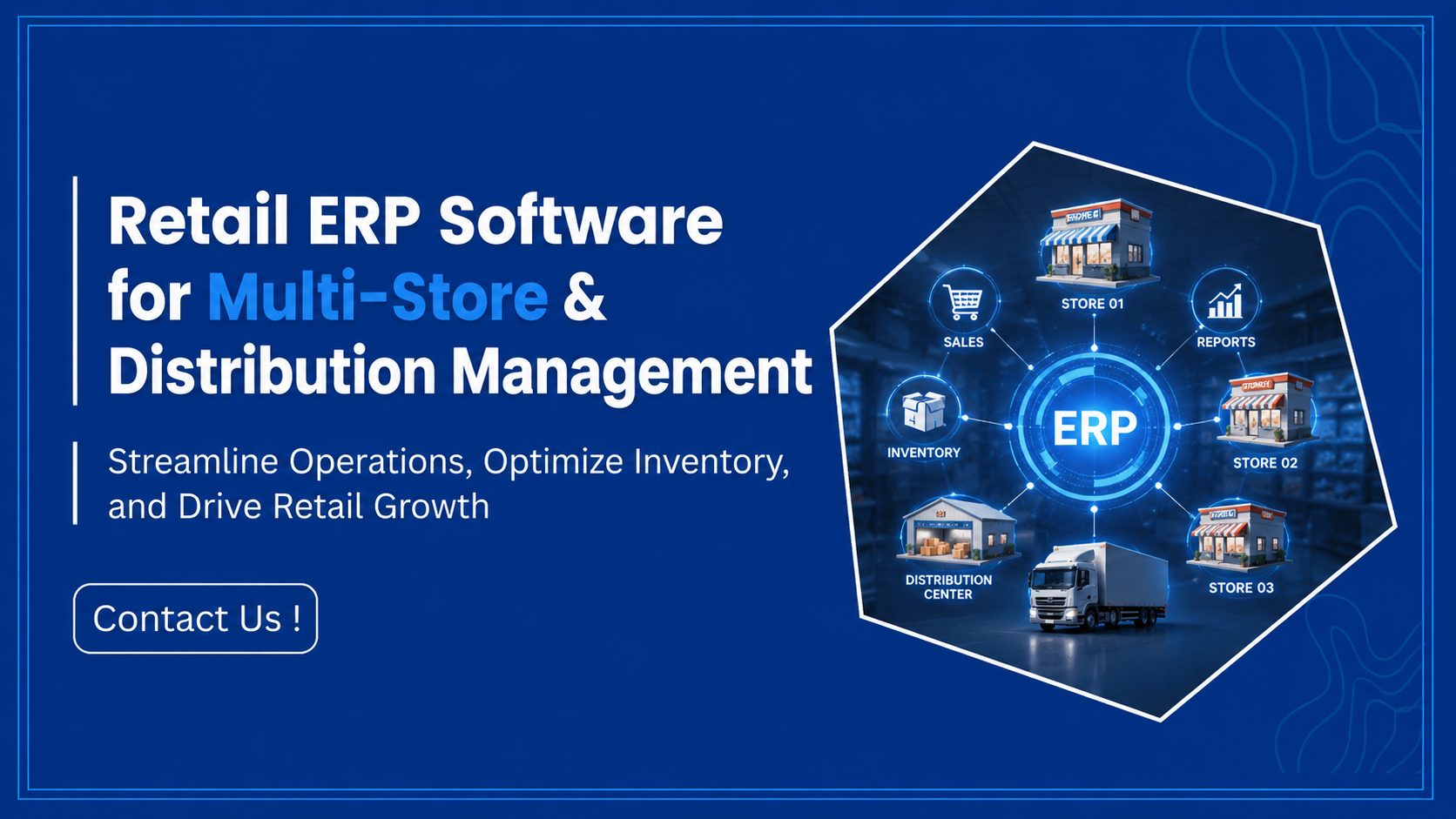
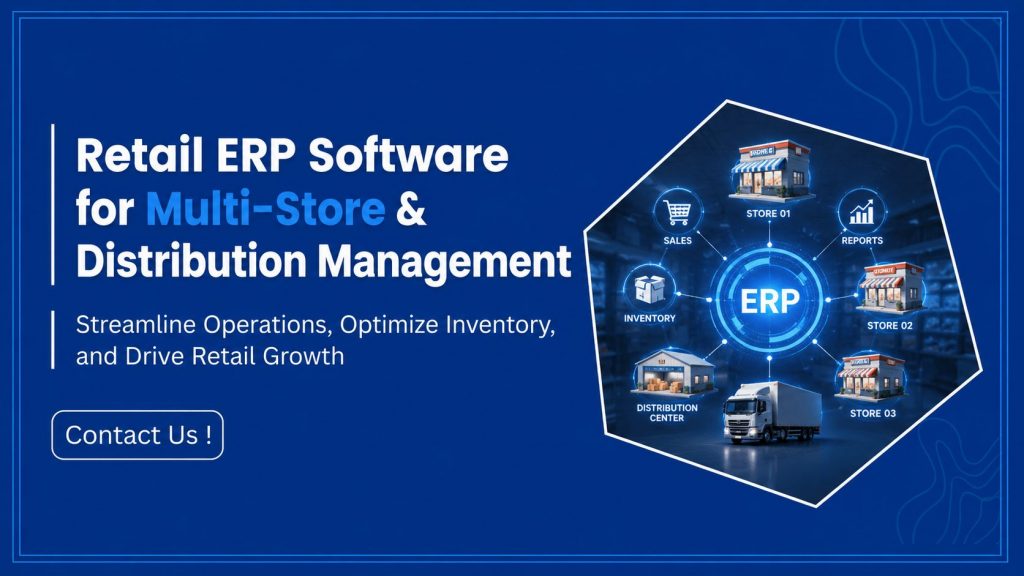
Modern retail ERP systems help businesses connect inventory, sales, procurement, customer engagement, finance, and operations into a centralized ecosystem. Instead of operating through multiple disconnected tools, retailers can manage their entire business through a unified platform.
As digital transformation accelerates across the retail sector, businesses are increasingly investing in:
- Retail ERP software solutions
- Omnichannel retail solutions
- Retail inventory management software
- Retail business automation services
These technologies are helping retailers improve operational efficiency, enhance customer experience, and build scalable retail operations.
What are Retail ERP Solutions?
Retail ERP solutions are integrated business management systems designed specifically for retail operations.
They help retailers manage:
- Inventory and stock movement
- Billing and POS operations
- Procurement and vendor coordination
- Customer relationship management
- Sales and reporting
- Omnichannel operations
Instead of relying on separate systems for inventory, sales, and customer management, ERP centralizes retail operations into a single platform.
This enables retailers to gain better visibility, improve coordination across stores and channels, and make faster business decisions.
Why Digital Transformation is Important in Retail
Retail businesses today operate in a highly competitive and customer-driven environment.
Consumers expect:
- Faster service
- Real-time inventory availability
- Personalized shopping experiences
- Consistent engagement across channels
Without digital systems, managing these expectations becomes difficult.
Retail digital transformation helps businesses:
- Automate repetitive processes
- Improve operational accuracy
- Reduce manual dependency
- Enable data-driven decision-making
- Deliver better customer experiences
Businesses that fail to modernize often struggle with operational inefficiencies and customer retention challenges.
Key Features of Retail Technology Solutions
Omnichannel Retail Management
Modern retailers no longer operate through a single sales channel.
Customers interact through:
- Physical stores
- eCommerce platforms
- Mobile applications
- Social commerce channels
Omnichannel retail solutions help businesses manage all channels through a unified system.
This ensures:
- Consistent pricing and inventory visibility
- Unified customer experience
- Centralized order management
- Better operational coordination
Retailers can deliver a seamless shopping experience regardless of where customers choose to engage.
Inventory and Stock Control
Inventory inaccuracies directly impact sales, customer satisfaction, and profitability.
Retail ERP systems provide:
- Real-time inventory visibility
- Automated stock updates
- Warehouse and store inventory synchronization
- Reorder management
With better inventory tracking, retailers can avoid stock shortages, overstocking, and inventory mismatches.
This is where advanced retail inventory management software becomes essential for growing retail operations.
Customer Relationship Management
Customer expectations are evolving rapidly.
Retail technology solutions help businesses build stronger customer relationships through:
- Purchase history tracking
- Personalized offers and promotions
- Loyalty program management
- Customer engagement insights
Retailers can better understand customer behavior and create more targeted engagement strategies.
Billing and POS Integration
Long billing queues and slow checkout experiences can negatively affect customer satisfaction.
Integrated POS systems enable:
- Faster billing processes
- Accurate transaction management
- Multi-store billing synchronization
- Digital payment integration
This improves both operational efficiency and customer experience.
Retail Analytics and Reporting
Retail businesses generate large volumes of operational and sales data.
ERP systems help convert this data into actionable insights through:
- Sales trend analysis
- Inventory reports
- Customer buying behavior insights
- Store performance tracking
Real-time reporting enables retailers to make faster and more informed business decisions.
Supply Chain and Vendor Management
Efficient supply chain coordination is essential for maintaining inventory flow and operational continuity.
Retail ERP systems streamline:
- Procurement processes
- Supplier communication
- Purchase order management
- Vendor performance tracking
This helps businesses improve procurement efficiency and reduce operational disruptions.
Benefits of Retail ERP Solutions
Improved Customer Experience: Retail ERP systems enable faster service, personalized engagement, and seamless omnichannel experiences leading to better customer satisfaction and retention.
Better Inventory Accuracy: Real-time inventory synchronisation reduces stock discrepancies and improves inventory planning across stores and warehouses.
Faster Sales Processing: Integrated POS and billing systems help retailers reduce checkout time and improve transaction efficiency.
Increased Retail Efficiency: Automation reduces manual processes, improves workflow coordination, and enables better operational management.
Real-Time Business Insights: Retailers gain access to real-time operational data that supports faster and smarter decision-making.
How Retail Technology Solutions Work
Centralized Retail Data Management
Retail ERP systems centralize sales, inventory, procurement, customer, and financial data into a single platform.
This improves visibility and reduces dependency on disconnected systems.
Automated Order Processing
Manual order management often leads to delays and errors.
Retail ERP automates:
- Order creation
- Inventory updates
- Billing workflows
- Delivery coordination
This improves order processing speed and operational efficiency.
Inventory Synchronization Across Stores
Retailers operating across multiple locations need accurate stock visibility.
ERP systems synchronise inventory across the following:
- Retail stores
- Warehouses
- Online channels
Ensuring consistent inventory tracking in real time.
Customer Purchase Analytics
Retail ERP solutions track customer purchasing behavior and buying patterns.
This helps businesses:
- Personalize promotions
- Improve marketing strategies
- Enhance customer engagement
Step-by-Step Retail ERP Implementation Guide
Define Retail Business Requirements: The first step is identifying operational challenges, business goals, and retail workflow requirements.
Configure Retail ERP Modules: Select and configure ERP functionalities aligned with your retail operations, inventory structure, and sales processes.
Integrate POS and Inventory Systems: Ensure seamless integration between billing, inventory, procurement, and sales systems for accurate data flow.
Train Retail Teams: Successful ERP implementation depends on user adoption.
Retail staff should be trained on:
- POS operations
- Inventory workflows
- Reporting tools
- Customer management processes
Step 5: Launch and Monitor Performance: After deployment, businesses should continuously monitor:
- System performance
- User adoption
- Operational efficiency
- Reporting accuracy
To optimize long-term ERP performance.
Best Practices for Retail ERP Software Success
To maximize ERP effectiveness, retailers should:
- Maintain accurate inventory data
- Optimize customer engagement workflows
- Use real-time reporting and analytics
- Ensure seamless omnichannel integration
- Regularly review operational processes
Technology delivers better results when supported by strong operational execution.
Common Retail Challenges and ERP Solutions
Inventory Mismatches: ERP provides real-time stock synchronization across stores and warehouses to improve inventory accuracy.
Slow Billing Processes: Integrated POS systems streamline transactions and reduce checkout delays.
Poor Customer Engagement: CRM functionalities help retailers personalise customer interactions and improve loyalty.
Disconnected Retail Operations: ERP centralises operations, enabling better coordination across departments and sales channels.
Why Choose Indictrans for Retail Technology Solutions?
Implementing retail ERP requires more than just software deployment it requires understanding retail workflows, customer behavior, and operational challenges.
Indictrans helps retailers:
- Implement customized retail ERP services
- Build scalable retail automation solutions
- Streamline inventory and sales operations
- Enable omnichannel retail management
- Improve operational visibility and efficiency
Our approach focuses on aligning technology with business goals to ensure long-term operational success.
Conclusion
Retail businesses today require connected, agile, and customer-focused operations.
Modern retail technology solutions help retailers streamline inventory, sales, procurement, customer engagement, and operational workflows through a centralised digital ecosystem.
By implementing the right ERP strategy (Retail ERP Software), businesses can:
- Improve customer experience
- Increase operational efficiency
- Enhance inventory accuracy
- Enable faster business decision-making
Retail transformation is no longer optional—it is essential for sustainable growth in a highly competitive market.
Ready to Modernize Your Retail Operations?
If your retail business is facing inventory challenges, disconnected systems, or operational inefficiencies, it may be time to adopt a smarter retail ERP approach.
At Indictrans, we help retailers implement scalable and process-driven ERP solutions tailored to their operational requirements.
👉 Book a free consultation to evaluate your retail workflows
👉 Explore how retail ERP can support your digital transformation journey