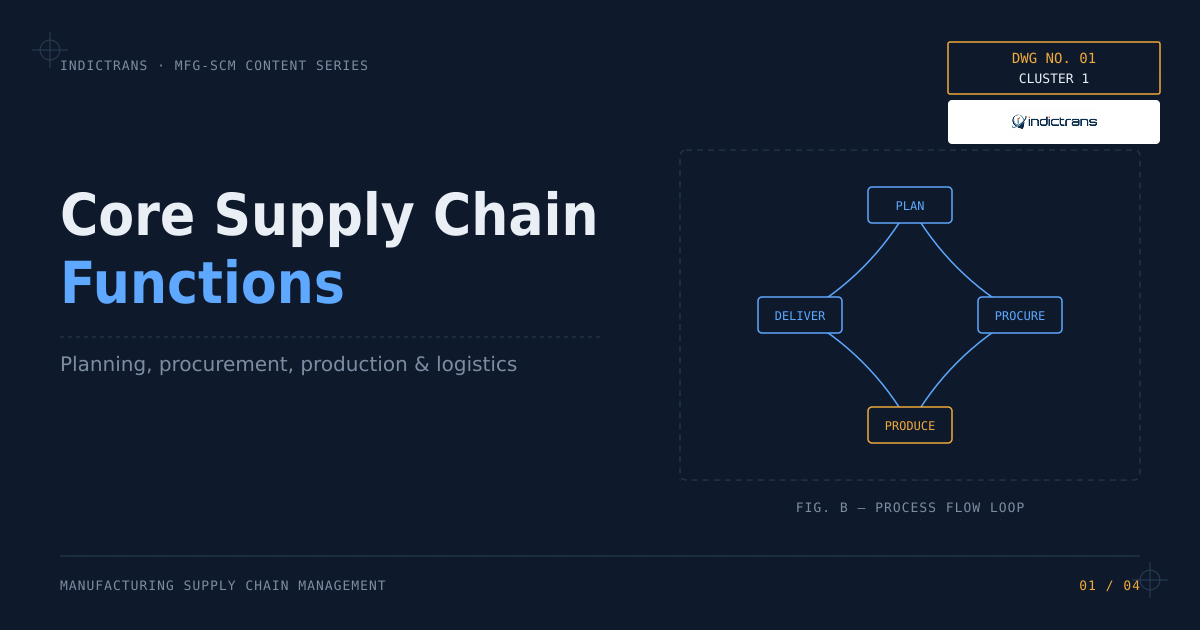
An effective manufacturing supply chain does not improve one department in isolation. Procurement, inventory, production, warehouses, logistics, sales, and finance all affect one another.
Indictrans helps manufacturers connect these processes through integrated business systems designed around actual operational requirements.
Demand Planning and Forecasting
Good supply chain decisions start with understanding demand.
Demand planning software uses historical sales, open orders, seasonal patterns, and other business data to help manufacturers estimate future requirements. More accurate forecasts support better purchasing, production, and inventory decisions.
Without reliable demand planning, manufacturers often face two expensive problems: buying too much inventory or not having enough material when production needs it.
A connected demand planning process helps manufacturers:
- Estimate future product demand
- Plan material requirements
- Reduce unnecessary stock
- Identify seasonal demand patterns
- Align purchasing with expected production
- Improve production capacity planning
Forecasting will never remove every uncertainty, but it gives teams a better basis for making decisions.
Procurement and Supplier Management
Procurement has a direct impact on production continuity and cost.
A manufacturing supply chain solution can help manage supplier records, quotations, purchase orders, approval workflows, delivery schedules, and supplier performance from one system.
Teams can monitor:
- Open purchase orders
- Expected delivery dates
- Supplier lead times
- Purchase prices
- Material availability
- Pending approvals
- Supplier performance history
Automated procurement workflows also reduce the dependence on emails and manual follow-ups.
When procurement data is connected with inventory and production planning, purchasing teams can buy based on actual requirements rather than assumptions.
Production Planning and Scheduling
Production plans should consider customer demand, material availability, machine capacity, labor, and delivery deadlines.
Disconnected planning often results in schedules that look workable on paper but fail because required materials are unavailable or production capacity has already been committed elsewhere.
Integrated production planning software helps manufacturers create more realistic schedules by connecting production requirements with inventory, procurement, and sales data.
Manufacturers can use this information to:
- Plan production orders
- Check raw material availability
- Allocate resources
- Identify capacity constraints
- Monitor work-in-progress
- Adjust schedules when priorities change
- Track production progress against planned timelines
Better planning reduces unnecessary downtime and helps improve on-time delivery.
Inventory Management
Inventory is one of the largest working capital investments for many manufacturers.
Too much stock increases storage costs and ties up cash. Too little stock creates production delays and missed customer commitments.
Effective inventory management for manufacturers provides real-time visibility into:
- Raw materials
- Components
- Work-in-progress
- Finished goods
- Reserved stock
- Incoming materials
- Reorder levels
- Batch and serial numbers
- Stock across multiple locations
This visibility helps businesses make more informed purchasing and production decisions.
Warehouse Management
As manufacturing operations grow, warehouse complexity increases.
Materials may move between receiving areas, quality inspection, production floors, work-in-progress locations, finished goods warehouses, and distribution centers.
A connected warehouse management software solution helps track these movements accurately.
Capabilities can include:
- Multi-warehouse inventory
- Bin and location tracking
- Stock transfers
- Goods receipt
- Picking and packing
- Batch and serial tracking
- Stock reconciliation
- Inventory valuation
Better warehouse visibility helps reduce misplaced stock, manual errors, and time spent searching for materials.
Logistics and Distribution
Manufacturing does not end when production is complete. Finished goods must reach customers at the right time and cost.
A connected manufacturing logistics system helps businesses coordinate order fulfillment, shipment planning, dispatch, and delivery information.
When logistics data is integrated with inventory and order management, teams can track what is ready to ship, what is pending, and which customer commitments may require attention.
Order Management
Sales orders affect inventory allocation, production requirements, purchasing, and delivery schedules.
A connected order management process ensures that teams work with the same information from the moment an order is received until it is delivered and invoiced.
This helps reduce communication gaps between sales, production, warehouse, logistics, and finance teams.
Supply Chain Analytics
Data is useful only when teams can understand and act on it.
Supply chain dashboards and reports can provide visibility into:
- Inventory turnover
- Stock aging
- Supplier performance
- Purchase order status
- Production efficiency
- Material shortages
- Warehouse stock
- Order fulfillment
- Delivery performance
Real-time reporting helps managers identify issues earlier and focus attention where it is needed most.
Core Supply Chain Capabilities
A connected manufacturing supply chain solution can bring several critical capabilities into one system.
Production Planning: Plan manufacturing activities based on demand, available resources, materials, and delivery commitments.
Material Requirements Planning (MRP): Calculate material requirements based on bills of materials, existing stock, scheduled receipts, and planned production.
MRP helps answer a basic but critical question: what materials are needed, in what quantity, and by when?
Inventory Management: Monitor stock levels, movements, batches, serial numbers, reorder points, and inventory valuation across locations.
Warehouse Management: Manage receiving, storage, internal transfers, picking, packing, and dispatch operations.
Procurement: Handle material requests, supplier quotations, purchase orders, receipts, and approvals through defined workflows.
Supplier Management: Maintain supplier information, transaction history, pricing, lead times, and performance records.
Logistics Management:Coordinate dispatch and delivery activities while maintaining visibility into order fulfillment.
Business Intelligence and Reporting: Use dashboards and reports to track KPIs, identify exceptions, analyze trends, and support operational decisions.
Read the full pillar guide: Manufacturing Supply Chain Management USA
Next in this series: Key Features of Our Manufacturing Supply Chain Solution