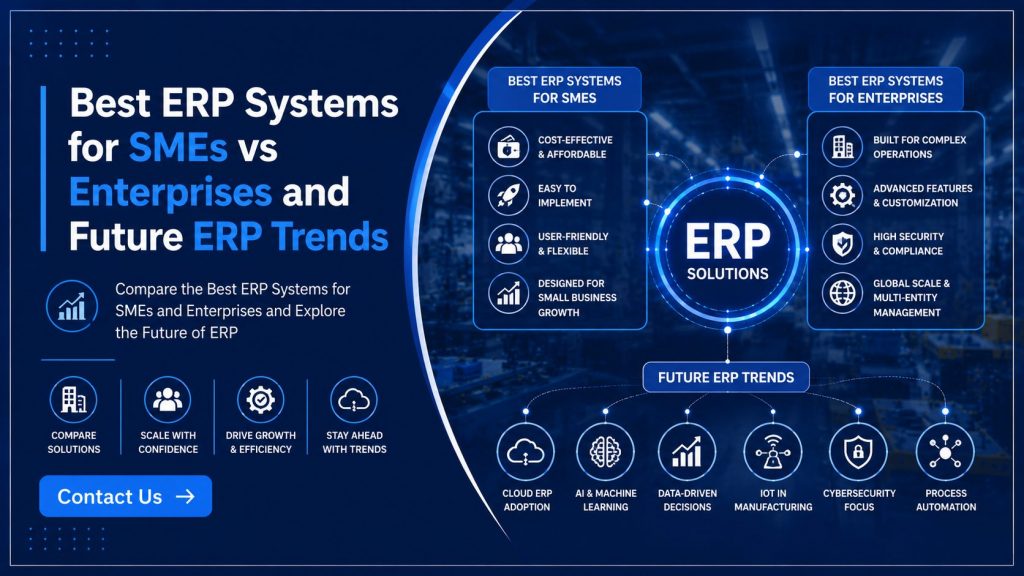

Best ERP Systems for Manufacturing SMEs vs Enterprises
The best ERP solution depends on business requirements rather than company size alone.
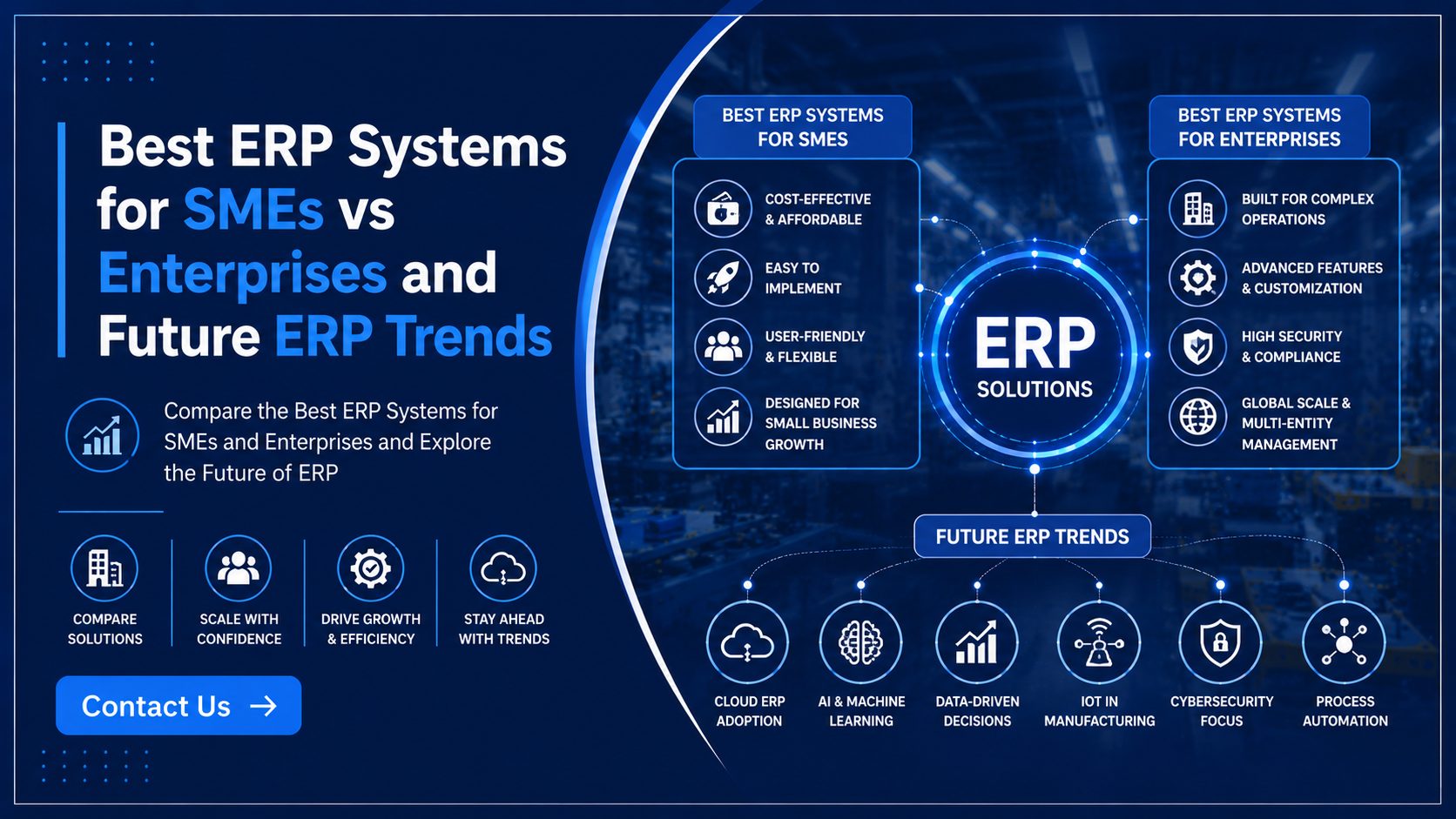
Small manufacturers often prioritise affordability, simplicity, and rapid implementation. They need core capabilities such as inventory management, production planning, purchasing, and financial management without unnecessary complexity.
Mid-sized manufacturers typically require more advanced functionality. Multi-site operations, detailed reporting, automation, quality management, and supply chain visibility become increasingly important as businesses grow.
Large enterprises often need global capabilities, multi-company management, advanced analytics, extensive integration options, and support for complex manufacturing environments.
Businesses should evaluate ERP systems based on operational needs, scalability, and long-term growth objectives rather than selecting software purely because it is marketed to a specific company size.
Future Trends in Manufacturing ERP Solutions
The future of manufacturing ERP is closely linked to automation, connectivity, and data intelligence.
Artificial intelligence is helping manufacturers improve forecasting accuracy, automate routine tasks, optimise production planning, and identify operational risks. AI-powered insights enable businesses to make faster and more informed decisions.
Industry 4.0 initiatives are driving greater integration between ERP systems and connected devices. Sensors, IoT equipment, and smart machinery generate valuable data that can be captured and analysed through ERP platforms.
Predictive analytics is becoming increasingly important. Manufacturers can use historical and real-time data to anticipate maintenance needs, forecast demand, and improve resource allocation.
Sustainability is also influencing ERP development. Businesses are looking for tools that help monitor energy consumption, reduce waste, and support environmental reporting requirements.
Cloud adoption continues to accelerate as manufacturers seek flexible and scalable solutions that support modern business models.
Next Steps
Manufacturers should evaluate ERP solutions carefully, considering operational requirements, scalability, user adoption, implementation strategy, reporting needs, compliance requirements, and long-term business objectives. A structured selection process reduces risk and improves the likelihood of successful outcomes.
Read the full pillar guide: How to Choose the Best ERP Solution for Manufacturing Businesses in the UK
Previous in this series: How to Choose & Compare ERP Vendors for Your Manufacturing Business