“As per the client’s confidentiality guidelines, we have not disclosed their name.”
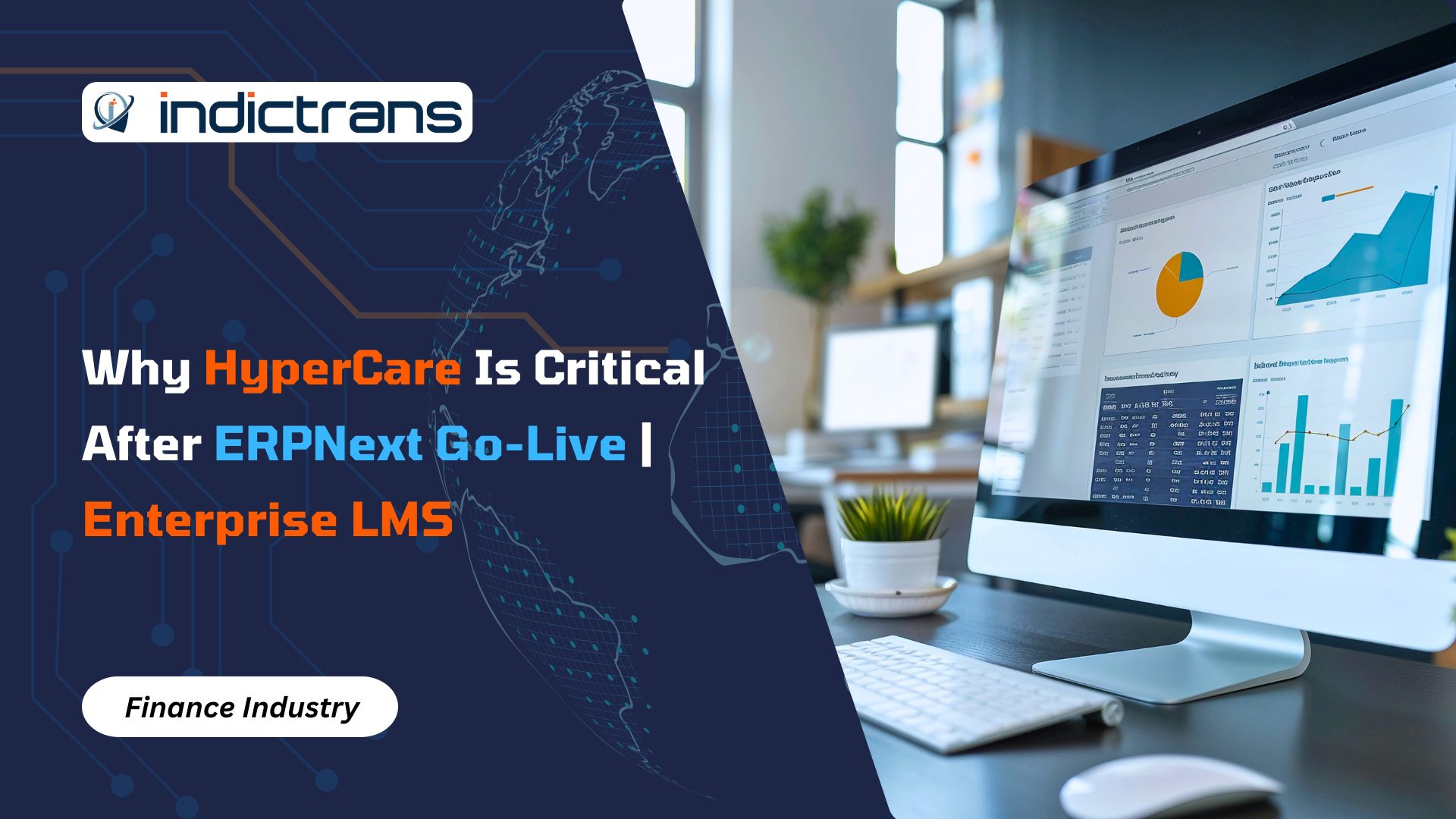
Why HyperCare Was Important In This Project After ERPNext Go-Live.
After successfully going live after ERPNext Go-Live, the company entered a critical post-implementation phase where real-world usage revealed configuration gaps, customization side effects, and evolving business requirements. Given the organization’s scale, regulatory sensitivity, and people-centric operations, uninterrupted system performance was essential. HyperCare support played a pivotal role in stabilizing the ERPNext environment, resolving post-go-live challenges quickly, and enabling company teams to confidently operate and evolve their HRMS and LMS workflows. This phase ensured that ERPNext became a reliable, scalable foundation rather than a bottleneck to growth.
Client Overview
Is a housing finance company committed to enabling millions of Indians to fulfill their aspiration of owning a bigger, better, and newer home. The organization operates on a strong foundation of people, technology, and data-driven decision-making, with a risk-management-led framework at its core. The company has financially included over 1 lakh customers, many with an average monthly income of approximately USD 600, who previously lacked access to formal credit due to limited income documentation. Precision, compliance, and operational scalability are critical to its business model.
See our results in action here: When Going Live Was Just the Beginning
Departments Automated Using ERPNext
- HRMS
- Learning Management System (LMS)
These modules support employee lifecycle management, attendance, leave, compliance training, and performance enablement across the organization.
The Challenges
1. Glitches from Extensive HR & LMS Customization
To accommodate specialized HR and training processes, multiple custom doctypes and workflows were introduced, including multi-level approvals, customized assessments, and role-based access controls.
Due to the depth of customization, functional issues surfaced in non-standard scenarios such as:
- Ad-hoc training programs
- Exception-based approvals
- Cross-module dependencies
These use cases were outside standard ERPNext behavior, resulting in unexpected system responses during live operations.
2. Configuration Gaps During the Initial Phase
Some foundational HR and LMS configurations were only partially mapped during early implementation stages:
- Leave policies were not fully aligned with complex organizational hierarchies
- Performance management modules were not implemented
- Employee lifecycle workflows (Offer → Onboarding → Confirmation) required
refinement - LMS course structures and evaluation criteria lacked standardization
These gaps became more evident once daily operations intensified.
3. Frequent Requirement Changes Due to Business Evolution
As the company scaled rapidly, HR policies and training needs continued to evolve. This led to:
- New approval stages
- Additional compliance and regulatory training modules
- Revisions to leave and attendance policies
- New role-based access permissions
Each change required careful revalidation across HRMS and LMS workflows, increasing complexity and impacting delivery timelines.
4. Side Effects from Customizing Standard ERPNext Features
Customizations to core ERPNext logic, such as employee check-ins, attendance processing, course completion rules, and workflow states, introduced several side effects:
- Interlinked workflows became harder to debug
- Changes in one module unintentionally affected others
- Performance issues emerged during data-heavy operations
- System stability was impacted during peak usage periods
This highlighted the need for stronger governance during post-go-live enhancements.
The Solution
Hands-On Development for Agility
The HyperCare team proactively handled minor yet business-critical developments, including workflow adjustments, scripts, and notifications. This ensured rapid issue resolution without dependency bottlenecks or prolonged downtime.
Stakeholder-Centric Requirement Management
Department heads and key stakeholders were actively involved in requirement reviews and prioritization. This direct engagement reduced ambiguity, minimized rework, and ensured that changes aligned closely with business realities.
Client Education on Customization Risks
Business users were guided to understand the long-term implications of over-customization. Through regular discussions and advisory support, the team encouraged a sustainable ERP approach balancing flexibility with stability and upgrade-friendliness.
Results & Impact
Efficiency Improvement
The company reported a 67% – 70% improvement in overall operational efficiency following ERP stabilization under HyperCare support.
Customer Satisfaction
- Satisfaction Score: 97.3%
Tickets Handled
- Total Tickets: 92
- 42 related to bugs, functional queries, and server issues
- 50 related to small tasks, enhancements, and change requests
These metrics reflect the responsiveness, reliability, and effectiveness of the HyperCare engagement.
Key Highlights & Learnings
1. ERP as a Living, Evolving System
This engagement reinforced that ERPNext is not a one-time deployment but a continuously evolving ecosystem. Flexible and future-ready configurations are essential for dynamic HR and LMS environments.
2. Strengthening Expertise in Large-Scale HR Scenarios
Supporting multi-entity HR operations refined our approach to employee mapping. permission structures, workflow routing, and compliance alignment.
3. Deepening Knowledge of Advanced HR & LMS Frameworks
Implementing onboarding, confirmations, multi-level approvals, and LMS assessments strengthened our understanding of enterprise-grade HR and training operations.
4. Finding the Right Balance in Customization
The project reinforced a key principle: customization must deliver long-term business value. Knowing when to leverage standard ERPNext features versus custom development is critical for maintainability and scalability.
Key Learnings for the Post Go-Live Support Team
- Treat ERP as an evolving system, not a one-time project
- Develop reusable frameworks for multi-branch and compliance-heavy environments
- Standardize HR and payroll practices to ensure consistency and compliance
- Define clear governance to balance customization and standard functionality
Turn your ERPNext go-live into long-term business value.
See how HyperCare supports continuous improvement and adoption.