Manufacturing businesses today operate in a complex environment where production planning, inventory management, procurement, and financial operations must work together seamlessly. When these systems operate in silos, companies face delays, inaccurate reporting, and operational inefficiencies.
This is where ERP solutions for manufacturing become critical.
A modern ERP system connects every core business function into a unified platform, enabling manufacturers to gain real-time visibility, streamline production workflows, and scale operations efficiently.
In this guide, we’ll explore how cloud ERP solutions for manufacturing are transforming the industry and how businesses can choose the best cloud ERP for manufacturing to support long-term growth.
Introduction to ERP Solutions for Manufacturing
What Are ERP Solutions for Manufacturing?
ERP solutions for manufacturing are integrated software platforms designed to manage and automate key manufacturing processes, including:
- Production planning
- Inventory management
- Procurement
- Supply chain coordination
- Financial management
- Quality control
Instead of relying on disconnected tools, ERP brings all operational data into a centralized system. This ensures that decision-makers have accurate, real-time insights across the entire manufacturing lifecycle.
Why Growing Enterprises Need Modern ERP Systems
As manufacturing businesses grow, operational complexity increases. Without an integrated system, teams often rely on spreadsheets or legacy software that cannot keep up with changing demands.
Modern ERP solutions for manufacturing help enterprises:
- Reduce manual errors
- Improve production planning accuracy
- Gain visibility into inventory levels
- Track costs more effectively
- Improve coordination across departments
For growing manufacturers, ERP becomes the foundation for scalable operations.
The Evolution from Traditional ERP to Cloud ERP Solutions for Manufacturing
Traditional ERP systems required expensive infrastructure, long implementation timelines, and complex maintenance.
Today, cloud ERP solutions for manufacturing provide a more flexible and scalable alternative.
With cloud deployment, manufacturers can:
- Access ERP systems from anywhere
- Reduce infrastructure costs
- Receive automatic updates
- Scale the system as the business grows
This shift toward cloud technology has made ERP more accessible for mid-sized and growing manufacturing enterprises.
Key Challenges Faced by Manufacturing Enterprises
Manufacturers often struggle with operational challenges that impact productivity and profitability.
Disconnected Production and Inventory Systems
When production planning and inventory systems operate independently, manufacturers experience:
- Inventory shortages
- Overproduction
- Inefficient material utilization
ERP solutions connect these systems, ensuring accurate material planning and production scheduling.
Lack of Real-Time Data Visibility
Many manufacturers rely on delayed reporting or manual data consolidation. This makes it difficult to respond quickly to operational issues.
With modern ERP platforms, managers gain real-time insights into production, inventory, and financial performance.
Supply Chain Inefficiencies
Poor coordination between procurement, suppliers, and production teams can create supply chain disruptions.
ERP systems streamline procurement workflows and improve vendor coordination, helping manufacturers maintain stable supply chains.
Scaling Issues with Legacy Systems
Legacy systems are often rigid and difficult to modify. As businesses grow, these systems struggle to support new processes, locations, or product lines.
Cloud ERP solutions provide the flexibility needed to scale operations efficiently.
What Are Cloud ERP Solutions for Manufacturing?
Cloud ERP solutions for manufacturing are ERP platforms hosted on secure cloud infrastructure rather than installed on local servers.
These systems allow manufacturers to access their ERP platform through a web interface, eliminating the need for complex on-site infrastructure.
How Cloud ERP Differs from On-Premise ERP
Key differences include:
- Lower infrastructure costs
- Faster implementation
- Automatic software updates
- Remote system accessibility
- Improved system scalability
For growing manufacturers, cloud ERP significantly reduces IT complexity.
Core Modules in Cloud ERP Solutions for Manufacturing
A modern manufacturing ERP typically includes modules such as:
- Production planning and control
- Inventory and warehouse management
- Procurement and vendor management
- Quality management
- Financial accounting
- Supply chain management
These modules work together to create a fully integrated operational system.
Benefits of Cloud Deployment for Growing Manufacturers
Cloud ERP provides several advantages for manufacturing businesses:
- Reduced upfront infrastructure costs
- Faster deployment timelines
- Improved system accessibility
- Simplified upgrades and maintenance
- Enhanced collaboration across teams
These benefits make cloud ERP solutions an attractive option for manufacturers aiming to modernize their operations.
Key Features to Look for in ERP Solutions for Manufacturing
Selecting the right ERP platform requires evaluating features that directly support manufacturing workflows.
Production Planning and Scheduling
Effective production planning ensures optimal use of machines, materials, and labor.
ERP systems help manufacturers:
- Manage production orders
- Schedule resources efficiently
- Track production progress
Inventory and Warehouse Management
Inventory management is one of the most critical components of manufacturing ERP.
Advanced ERP systems provide:
- Real-time stock tracking
- Automated replenishment planning
- Multi-warehouse management
Procurement and Vendor Management
ERP platforms streamline procurement by automating purchase requests, supplier communication, and order tracking.
This helps reduce delays and improve supplier coordination.
Quality Control and Compliance
Manufacturing businesses must maintain strict quality standards.
ERP systems enable manufacturers to track inspections, monitor compliance, and ensure product quality.
Financial Management and Cost Tracking
Manufacturing ERP systems integrate operational and financial data, allowing businesses to track:
- Production costs
- Profit margins
- Budget performance
This improves financial planning and decision-making.
Real-Time Analytics and Reporting
ERP platforms provide dashboards and reports that help leadership teams monitor:
- Production performance
- Inventory levels
- Sales trends
- Operational efficiency
Real-time analytics empower data-driven decisions.
Benefits of the Best Cloud ERP for Manufacturing Enterprises
Implementing the best cloud ERP for manufacturing delivers significant operational advantages.
Improved Operational Efficiency: Automation reduces manual processes and improves workflow coordination across departments.
Real-Time Decision Making: Managers gain immediate access to operational data, enabling faster and more informed decisions.
Reduced Operational Costs: ERP systems help optimize resource utilization, reduce waste, and improve procurement efficiency.
Better Demand Forecasting: ERP platforms analyze historical sales data and demand patterns to improve production planning.
Seamless Integration Across Departments: ERP eliminates data silos by connecting finance, production, procurement, and sales systems.
Scalability for Business Growth: Cloud ERP systems allow manufacturers to expand operations without needing major infrastructure upgrades.
How to Choose the Best Cloud ERP for Manufacturing
Selecting the right ERP platform requires careful evaluation.
Identify Your Business Requirements: Start by defining your operational challenges and long-term goals.
Evaluate Industry-Specific Capabilities: Choose ERP platforms designed for manufacturing workflows rather than generic business systems.
Assess Integration Capabilities: Ensure the ERP platform can integrate with existing tools such as CRM systems, e-commerce platforms, or analytics tools.
Consider Security and Compliance Standards: Cloud ERP providers should follow strong security protocols and compliance standards.
Compare Total Cost of Ownership: Evaluate implementation costs, subscription fees, and long-term maintenance costs.
Vendor Support and Implementation Expertise: A reliable implementation partner ensures smoother deployment and long-term support.
ERP Solutions for Manufacturing vs Traditional Systems
Cost Comparison: Cloud ERP typically requires a lower upfront investment than traditional on-premises ERP systems.
Flexibility and Customization: Modern ERP platforms enable businesses to customize workflows to meet operational needs.
Implementation Timeline: Cloud ERP systems are generally faster to implement than traditional ERP solutions.
Maintenance and Upgrades: Cloud ERP vendors handle system updates and infrastructure maintenance, reducing IT burden.
Implementation Best Practices for Cloud ERP Solutions for Manufacturing
Define Clear Project Goals: Establish measurable objectives before starting implementation.
Involve Cross-Functional Teams: Engage departments such as production, finance, and procurement during the implementation process.
Data Migration Strategy: Ensure accurate data migration from legacy systems.
Employee Training and Change Management: User adoption is essential for ERP success. Training programs help employees adapt to new systems.
Post-Implementation Optimization: ERP systems should continuously evolve as business requirements change.
Why Growing Enterprises Are Moving to the Best Cloud ERP for Manufacturing
Manufacturers are increasingly adopting cloud ERP systems to remain competitive.
Supporting Multi-Location Operations: ERP enables centralized management of multiple factories, warehouses, and business units.
Enabling Smart Factory and Industry 4.0 Initiatives: ERP systems integrate with IoT and advanced analytics platforms, supporting modern manufacturing technologies.
Enhancing Supply Chain Collaboration: Cloud platforms allow better communication between manufacturers, suppliers, and distributors.
How ERP Solutions for Manufacturing Drive Long-Term Business Growth
ERP platforms are not just operational tools; they are strategic growth enablers.
Data-Driven Strategy Development: Manufacturers can analyze operational data to improve strategic planning.
Improved Customer Satisfaction: ERP improves order accuracy, delivery timelines, and product quality.
Faster Time to Market: Improved production coordination enables faster product launches.
Conclusion: Choosing the Right ERP Solutions for Manufacturing
Selecting the right ERP platform is a strategic decision that impacts operational efficiency and long-term growth.
Final Checklist for Selecting the Best Cloud ERP for Manufacturing
- Industry-specific capabilities
- Strong integration support
- Scalable cloud infrastructure
- Reliable implementation partner
- Transparent pricing structure
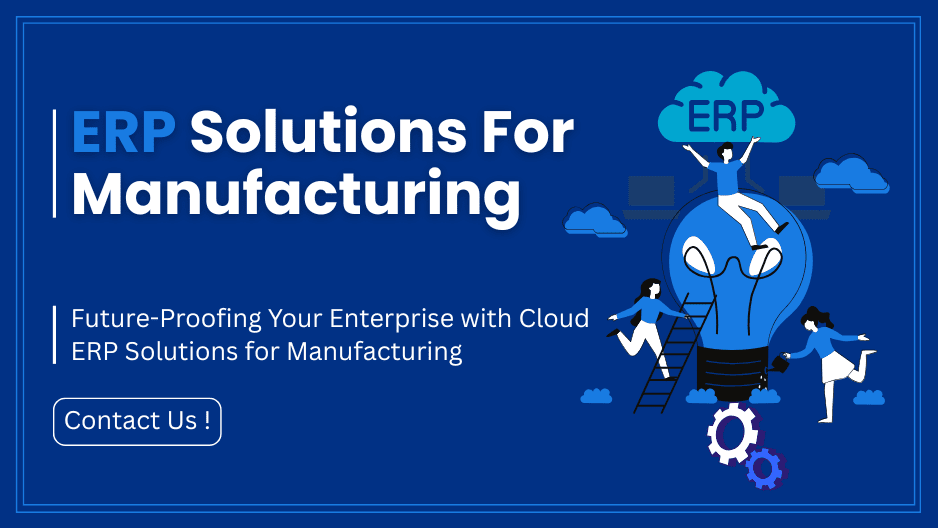
Future-Proofing Your Enterprise with Cloud ERP Solutions for Manufacturing
Modern manufacturing requires agility, data visibility, and seamless operational coordination.
By implementing the right ERP solutions for manufacturing, businesses can improve efficiency, reduce operational risks, and build a scalable foundation for long-term growth.
Modern Manufacturing Requires Modern ERP
Disconnected systems, delayed reporting, and inefficient workflows slow down growth. A powerful cloud ERP platform gives your team the visibility, control, and scalability needed to stay competitive in today’s manufacturing landscape.
Connect with our ERP specialists to explore the best cloud ERP solutions for your manufacturing business.
Start Your ERP Transformation Today
Get expert guidance, implementation support, and a solution tailored to your manufacturing operations.