
How to Choose the Best ERP for Manufacturing in the UK
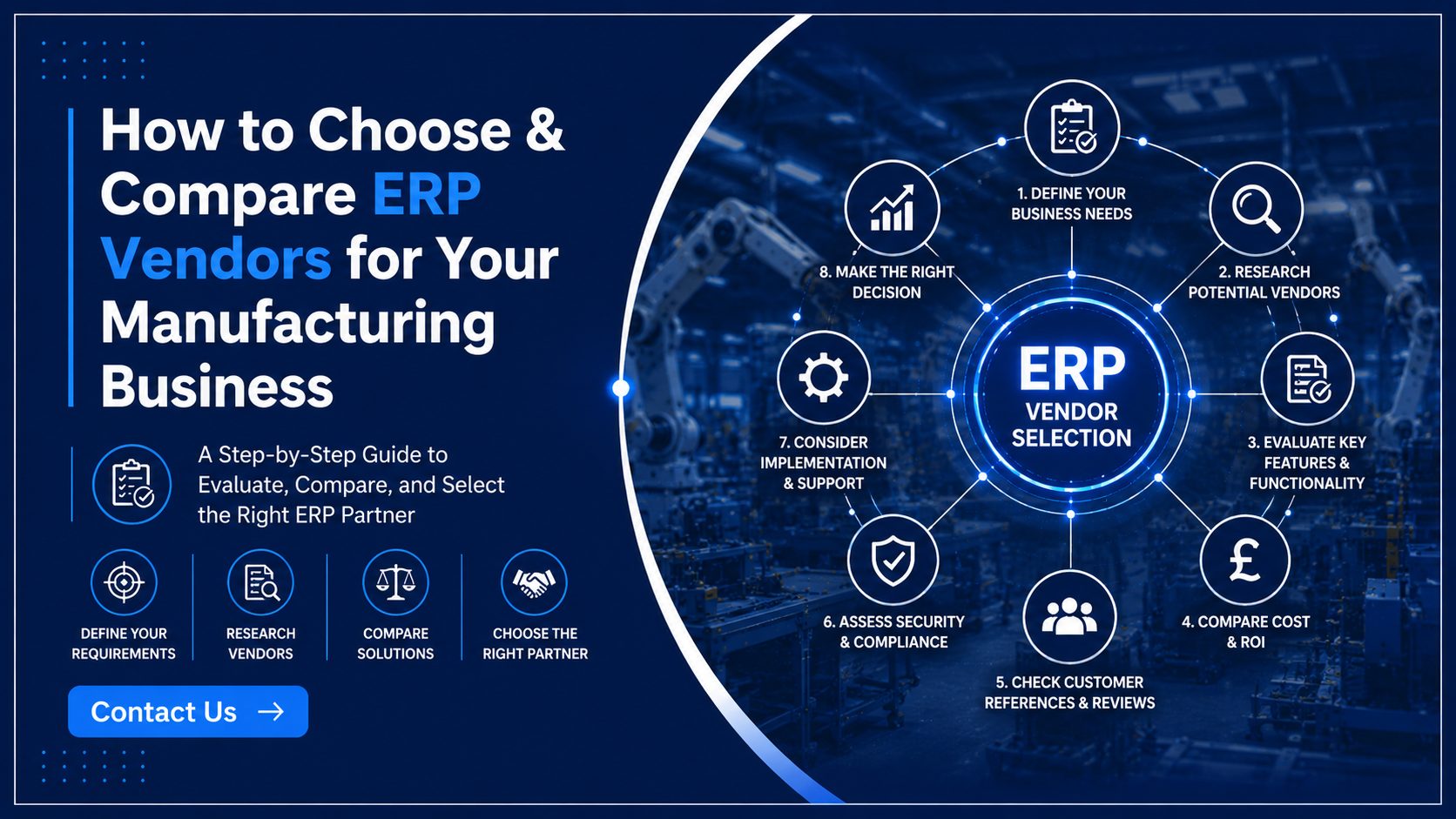
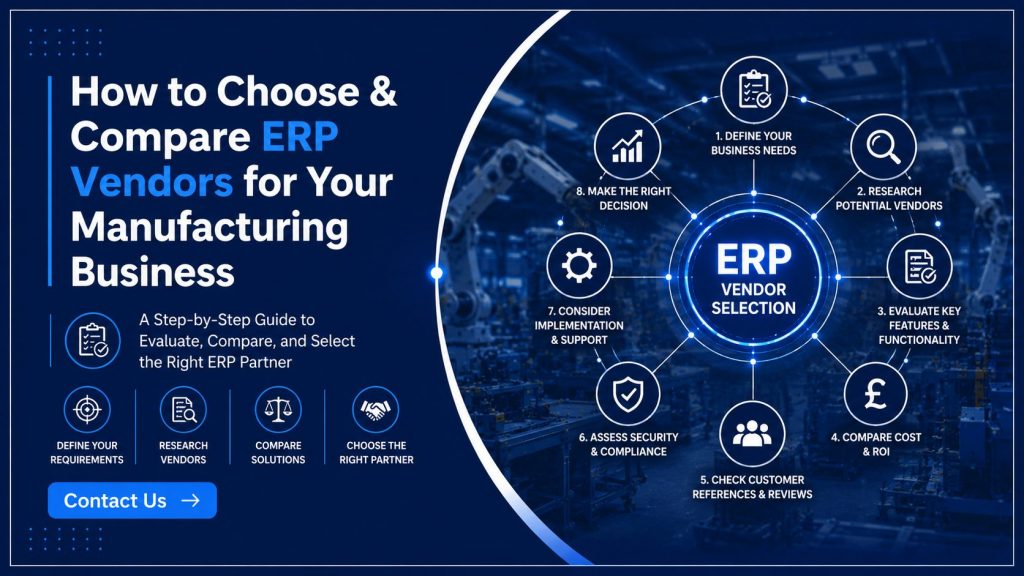
Selecting an ERP system should begin with a clear understanding of business objectives. Manufacturers should identify current challenges, future growth plans, reporting requirements, compliance obligations, and operational priorities.
The next step is to involve key stakeholders. Production managers, finance teams, procurement professionals, warehouse staff, and leadership teams all interact with ERP systems differently. Their input helps ensure that selected software meets practical business needs.
Businesses should document functional requirements before engaging vendors. This allows for a more objective comparison and reduces the risk of selecting software based solely on demonstrations or marketing materials.
Scalability is another important consideration. The chosen ERP system should support future growth without requiring major replacements or expensive customisations.
Manufacturers should also evaluate vendor experience. ERP providers with manufacturing expertise are often better equipped to understand industry-specific processes, implementation challenges, and best practices.
Finally, businesses should assess implementation methodology, training programs, support services, and total cost of ownership before making a final decision.
What to Compare Between ERP Solutions
Comparing ERP solutions involves much more than reviewing feature lists. Businesses should evaluate overall business value, implementation support, scalability, and vendor expertise.
Pricing is an important factor, but it should not be the only consideration. The true cost of ERP includes software licensing, implementation services, training, support, maintenance, infrastructure, and future upgrades.
Ease of use plays a major role in user adoption. Systems with intuitive interfaces typically achieve better results because employees can learn and use them more effectively.
Customer support is another critical factor. Manufacturers should assess support availability, response times, training resources, and industry knowledge.
Integration capabilities are equally important. ERP systems should connect seamlessly with existing applications, machinery, e-commerce platforms, CRM systems, and reporting tools.
Mobile accessibility is increasingly valuable, particularly for managers who need access to operational information while away from their desks.
Questions to Ask ERP Vendors
Manufacturers should approach ERP selection as a strategic investment rather than a software purchase. Asking the right questions can reveal valuable information about vendor capabilities and project suitability.
- Does the ERP system support our manufacturing workflows?
- Can the platform scale with future growth?
- What implementation services are included?
- How long will deployment take?
- What training resources are available?
- How does the vendor handle upgrades?
- What support options are provided after go-live?
- What integrations are available?
- How is data migration managed?
- What experience does the vendor have within manufacturing?
These questions help businesses compare vendors more effectively and reduce implementation risk.
Common ERP Implementation Mistakes to Avoid
Many ERP projects fail to achieve expected outcomes because of avoidable mistakes. One of the most common is choosing software based solely on price. Low-cost solutions may lack critical functionality or require expensive customisation later.
Another frequent issue is insufficient change management. ERP implementation affects processes, responsibilities, and daily workflows. Without adequate communication and training, user adoption can suffer.
Poor data migration planning also creates problems. Inaccurate or incomplete data can undermine reporting, inventory management, and operational performance.
Businesses sometimes underestimate implementation complexity. Successful projects require clear governance, executive sponsorship, realistic timelines, and dedicated resources.
Finally, organisations often fail to define measurable objectives. Establishing KPIs before implementation helps evaluate success and ensures the project remains aligned with business goals.
Next Steps
Manufacturers should evaluate ERP solutions carefully, considering operational requirements, scalability, user adoption, implementation strategy, reporting needs, compliance requirements, and long-term business objectives. A structured selection process reduces risk and improves the likelihood of successful outcomes.
Read the full pillar guide: How to Choose the Best ERP Solution for Manufacturing Businesses in the UK
Previous in this series: Cloud ERP vs Traditional ERP for Manufacturing Companies
Next in this series: Best ERP Systems for SMEs vs Enterprises and Future ERP Trends