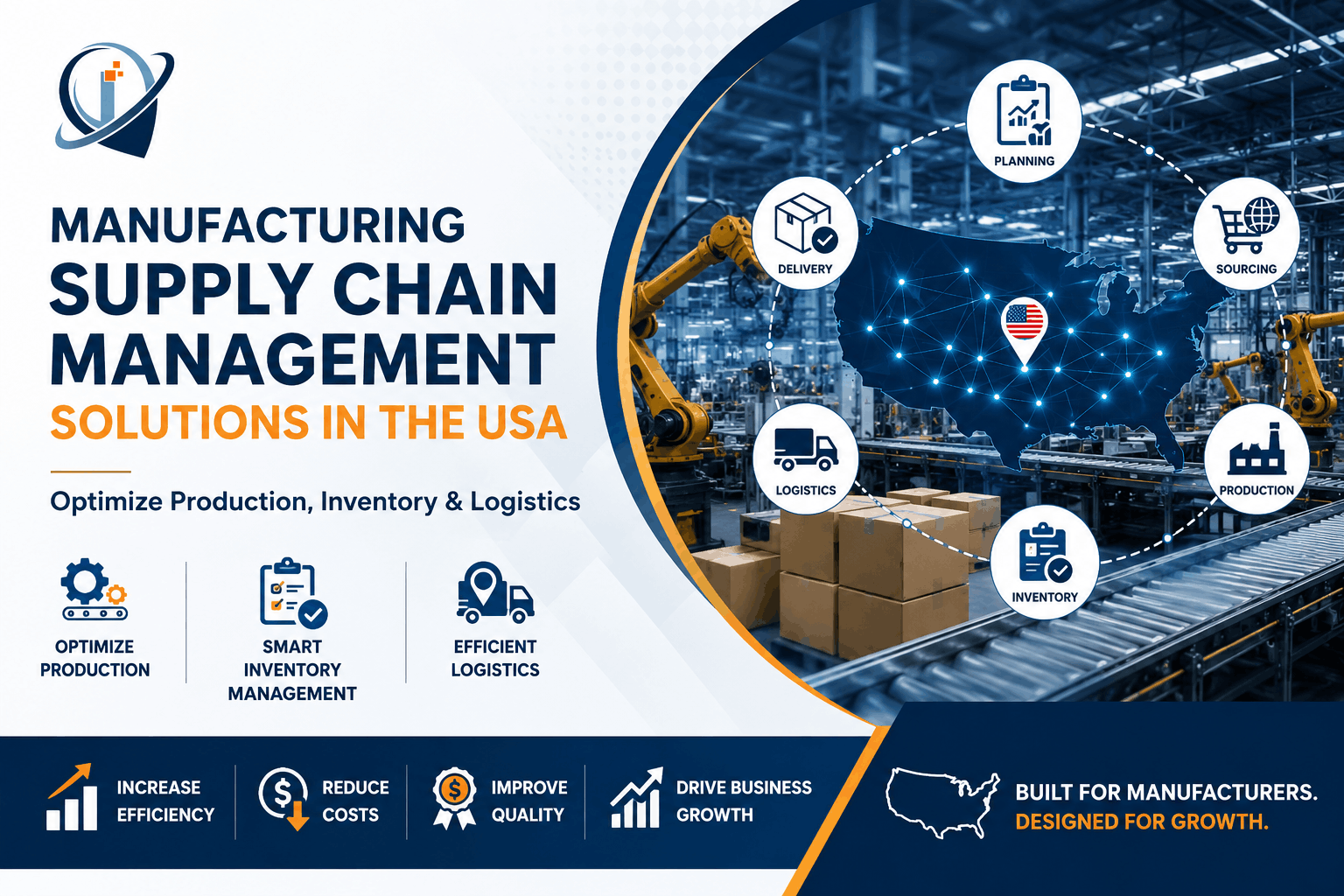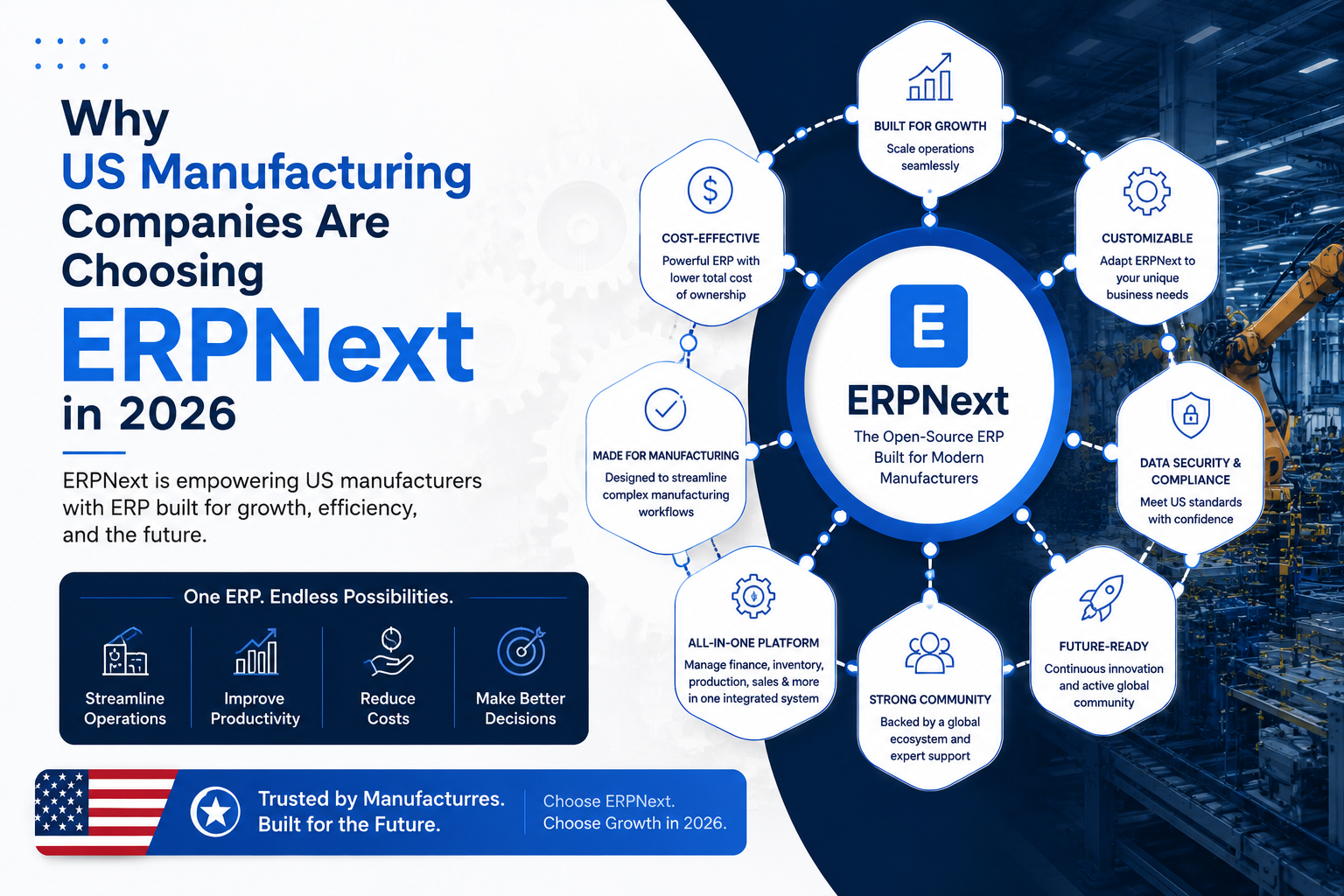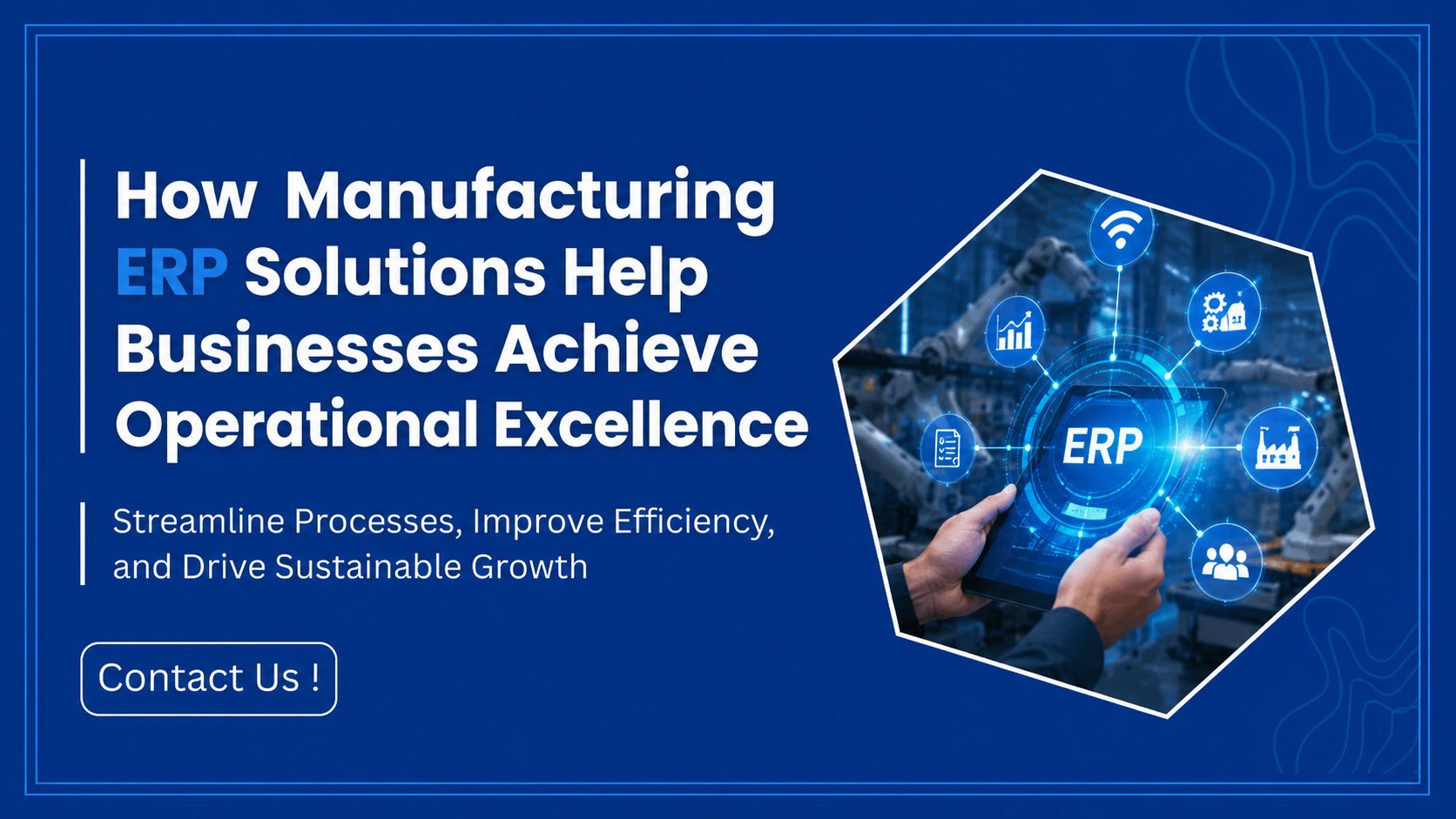

The manufacturing industry is evolving rapidly. Rising customer expectations, increasing operational complexity, supply chain disruptions, and the growing demand for faster production cycles are pushing manufacturers to rethink how they manage their operations.
Traditional manufacturing processes that rely on disconnected systems, spreadsheets, and manual coordination are no longer sustainable in a highly competitive environment. Lack of real-time visibility across production, inventory, procurement, and resource planning often results in delayed production schedules, excess inventory, increased operational costs, and reduced efficiency.
This is where manufacturing ERP solutions have become essential.
Modern ERP systems are helping manufacturers move toward connected and data-driven operations by integrating production planning, inventory management, procurement, finance, quality control, and supply chain activities into a single centralized platform.
With the rise of digital transformation and Industry 4.0 initiatives, businesses are increasingly adopting smart manufacturing software to improve operational visibility, streamline workflows, and enable faster decision-making.
Manufacturing ERP is no longer just a backend operational tool it has become a strategic technology that enables businesses to improve productivity, optimize resources, and achieve long-term operational excellence.
Core Capabilities of Manufacturing ERP Solutions
Demand Forecasting and Production Planning
One of the biggest challenges in manufacturing is balancing production capacity with market demand. Overproduction increases holding costs, while underproduction affects customer satisfaction and revenue.
Manufacturing ERP systems help businesses improve forecasting accuracy by analyzing:
- Historical sales patterns
- Inventory trends
- Demand fluctuations
- Production capacity
This allows manufacturers to align production schedules with actual demand, reducing wastage and improving operational planning.
Advanced ERP for production management also enables manufacturers to create dynamic production schedules that can quickly adapt to changing market conditions.
Shop Floor Monitoring
Real-time visibility into shop floor operations is critical for maintaining production efficiency.
Manufacturing ERP solutions enable businesses to monitor:
- Production progress
- Machine utilization
- Downtime
- Workforce productivity
- Work order status
This real-time tracking helps production managers identify operational bottlenecks early and make informed decisions to maintain workflow continuity.
Instead of reacting to problems after they occur, manufacturers can proactively manage production activities and improve overall shop floor efficiency.
Procurement and Supplier Management
Procurement inefficiencies can significantly impact manufacturing timelines and operational stability.
ERP systems streamline procurement by helping businesses:
- Automate purchase requisitions and approvals
- Track supplier performance
- Manage vendor communication
- Monitor procurement cycles
- Maintain material availability
By improving supplier coordination and purchasing efficiency, manufacturers can reduce delays and avoid production interruptions caused by material shortages.
Batch and Process Management
For industries handling batch production or process manufacturing, maintaining consistency and traceability is essential.
Manufacturing ERP systems support:
- Batch tracking and traceability
- Formula and recipe management
- Quality control processes
- Process standardization
This ensures better production accuracy, compliance, and operational consistency across manufacturing cycles.
Businesses operating in industries such as food processing, chemicals, pharmaceuticals, and textiles particularly benefit from these capabilities.
Workforce and Resource Allocation
Efficient utilization of labor and machinery directly impacts manufacturing performance.
ERP systems help businesses optimize:
- Workforce scheduling
- Machine allocation
- Production capacity planning
- Resource availability tracking
This improves operational efficiency while reducing idle time and resource wastage.
Manufacturers can make better decisions regarding production planning and workforce management using real-time operational data.
Compliance and Regulatory Tracking
Manufacturers often operate under strict industry regulations and compliance standards. Managing documentation manually increases the risk of errors and compliance failures.
Manufacturing ERP solutions simplify compliance management through:
- Automated documentation tracking
- Audit-ready reporting
- Quality compliance monitoring
- Traceability records
This helps businesses maintain operational transparency and meet industry standards more effectively.
Business Advantages of Implementing Manufacturing ERP
Improved Production Accuracy
Manufacturing ERP centralizes operational data and reduces manual intervention, helping businesses improve production accuracy and reduce process inconsistencies.
With better coordination between departments, manufacturers can minimize production errors and improve output quality.
Enhanced Supply Chain Coordination
ERP systems improve collaboration between procurement, inventory, production, and logistics teams.
This connected ecosystem enables smoother material flow, better inventory planning, and improved supplier coordination across the supply chain.
Faster Order Fulfillment
Real-time production visibility and inventory synchronisation help manufacturers process and fulfill customer orders faster.
ERP systems reduce operational delays and improve order management efficiency, leading to better customer satisfaction.
Better Cost and Resource Control
Manufacturing ERP systems provide detailed insights into:
- Material consumption
- Production costs
- Machine utilization
- Operational expenses
This enables businesses to identify inefficiencies, reduce wastage, and improve cost control across manufacturing operations.
Increased Manufacturing Agility
Modern manufacturing environments require businesses to adapt quickly to market changes and operational challenges.
ERP systems improve manufacturing agility by enabling:
- Flexible production planning
- Faster operational decision-making
- Improved resource allocation
- Real-time process visibility
This allows manufacturers to respond more effectively to changing business demands.
How ERP Streamlines Manufacturing Operations
Centralized Production Data Management
Manufacturing ERP consolidates production, inventory, procurement, finance, and operational data into a single platform.
This eliminates information silos and improves visibility across the organisation.
Decision-makers can access accurate real-time data without relying on multiple disconnected systems.
Automated Workflow Coordination
Manual workflows often slow down manufacturing operations and increase dependency on human intervention.
ERP systems automate:
- Production scheduling
- Inventory updates
- Procurement approvals
- Reporting processes
- Material requests
This improves workflow efficiency and reduces operational delays.
Real-Time Inventory and Resource Updates
Inventory inaccuracies are one of the biggest causes of production disruption.
ERP systems provide real-time updates on:
- Raw material availability
- Warehouse stock levels
- Resource allocation
- Machine status
This helps manufacturers maintain better inventory control and production continuity.
Performance Measurement and Reporting
Manufacturing ERP solutions provide advanced reporting and analytics capabilities that help businesses track:
- Production efficiency
- Operational KPIs
- Resource utilization
- Downtime trends
- Process performance
This data-driven visibility supports continuous operational improvement.
Manufacturing ERP Implementation Framework
Step 1: Identify Operational Gaps
The first step is evaluating existing manufacturing challenges, inefficiencies, and process gaps across departments.
Understanding operational bottlenecks helps define clear ERP implementation objectives.
Step 2: Select Industry-Specific ERP Features
Every manufacturing business has unique operational requirements.
Choosing industry-specific ERP functionalities ensures better alignment with production workflows and business processes.
Step 3: Digitize Production and Inventory Processes
Replacing manual systems with digital workflows improves operational visibility, data accuracy, and process control.
This creates a strong foundation for long-term manufacturing optimization.
Step 4: Enable Cross-Department Integration
Manufacturing ERP works best when departments operate within a connected ecosystem.
Integrating procurement, production, inventory, finance, and sales improves collaboration and operational efficiency.
Step 5: Monitor System Performance After Deployment
ERP implementation is an ongoing process.
Businesses should continuously monitor system performance, user adoption, and operational improvements to maximise long-term ERP value.
Best Practices for Optimizing Manufacturing ERP
To maximize ERP effectiveness, manufacturers should:
- Align ERP goals with business objectives
- Regularly update operational workflows
- Use analytics for continuous process improvement
- Encourage employee adoption and training
- Continuously optimize system usage based on operational needs
Technology alone cannot drive operational excellence consistent execution and process alignment are equally important.
Common Manufacturing Inefficiencies Solved by ERP
Lack of Production Coordination: ERP centralizes workflows and improves communication between departments, reducing operational disconnects.
Delayed Procurement Cycles: Automated procurement processes improve supplier coordination and reduce purchasing delays.
Poor Inventory Planning: Real-time inventory visibility helps businesses avoid stock shortages and excess inventory accumulation.
Manual Reporting Challenges: ERP automates reporting processes and provides real-time insights for faster decision-making.
Why Indictrans is a Trusted Manufacturing ERP Partner
Successful ERP implementation requires more than technical deployment it requires a deep understanding of manufacturing operations.
Indictrans helps businesses implement scalable and process-driven manufacturing ERP solutions tailored to their operational requirements.
Our approach focuses on:
- Understanding manufacturing workflows
- Streamlining production and inventory operations
- Customizing ERP based on business needs
- Enabling smooth system adoption across teams
- Providing continuous support and optimization
With strong implementation expertise and industry understanding, Indictrans helps manufacturers build connected and future-ready operations.
Emerging Technologies Shaping Manufacturing ERP
Industrial IoT Integration: Connected devices and sensors are enabling manufacturers to monitor operations and machine performance in real time.
AI-Powered Production Analytics: AI-driven insights are helping manufacturers improve forecasting, optimise production planning, and identify operational inefficiencies faster.
Cloud Manufacturing Platforms: Cloud-based ERP systems are improving accessibility, scalability, and collaboration across manufacturing operations.
Smart Automation and Robotics: Automation technologies integrated with ERP systems are helping businesses improve production efficiency and reduce manual dependency.
Conclusion
Modern manufacturing businesses require more than isolated systems and manual operational management.
Manufacturing ERP solutions help organisations create connected, efficient, and scalable operations by integrating production, inventory, procurement, finance, and resource planning into a unified system.
By improving operational visibility, streamlining workflows, and enabling data-driven decision-making, ERP systems support manufacturers in achieving long-term operational excellence.
Ready to Transform Your Manufacturing Operations?
If your business is facing production inefficiencies, inventory challenges, or disconnected operational workflows, it may be time to adopt a smarter manufacturing ERP approach.
At Indictrans, we help manufacturers implement scalable ERP solutions aligned with their operational goals and digital transformation initiatives.
👉 Book a free consultation to assess your manufacturing workflows.
👉 Explore how ERP can streamline and optimize your operations.