
Many manufacturers continue using spreadsheets and legacy systems for years before recognising the need for ERP. However, certain warning signs often indicate that existing systems are no longer sufficient.
Excessive Manual Data Entry
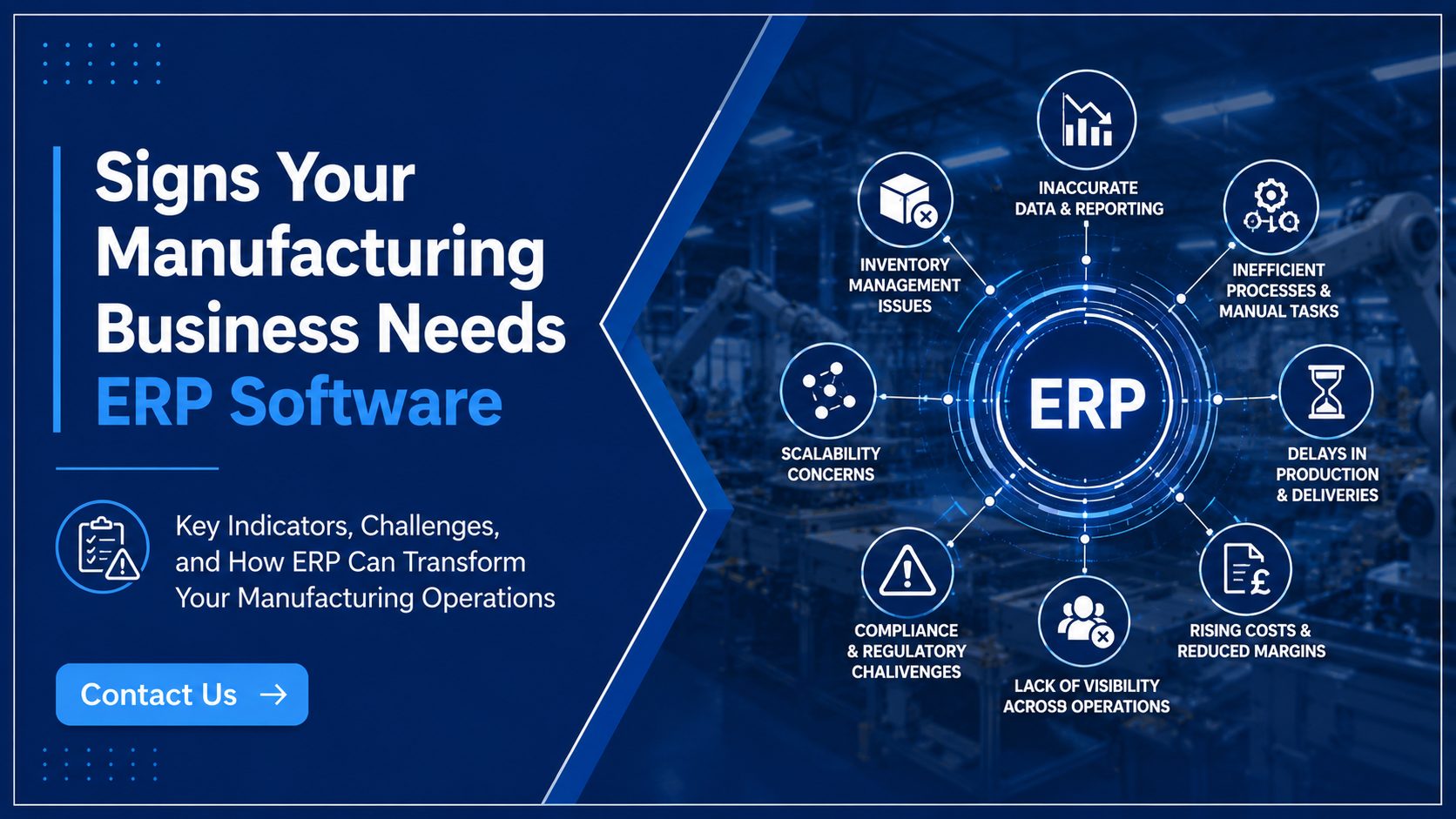
One of the most common signs is excessive manual data entry. When employees spend hours updating spreadsheets, preparing reports, or reconciling information across systems, productivity suffers.
Inventory Challenges
Inventory challenges are another indicator. Frequent stock shortages, overstocking, inaccurate inventory records, and production delays often result from poor visibility into inventory levels.
Lack of Real-Time Data
Lack of real-time data can also hinder decision-making. Management teams need timely information to monitor performance, identify issues, and respond quickly to changing market conditions.
Growing Operational Complexity
Growing businesses often experience operational complexity as they add products, customers, suppliers, and locations. ERP software provides the scalability needed to manage this growth effectively.
Slow Reporting and Departmental Silos
If reporting takes days instead of minutes, customer orders are delayed, or departments operate in silos, it may be time to evaluate ERP software.
Next Steps
Manufacturers should evaluate ERP solutions carefully, considering operational requirements, scalability, user adoption, implementation strategy, ERPNext Implementation for Manufacturing, reporting needs, compliance requirements, and long-term business objectives. A structured selection process reduces risk and improves the likelihood of successful outcomes.
Read the full pillar guide: How to Choose the Best ERP Solution for Manufacturing Businesses in the UK
Next in this series: Essential Features to Look for in Manufacturing ERP Software