Introduction to Digital Transformation
Manufacturing and retail businesses are evolving faster than ever. Customer expectations are changing, operations are becoming more complex, and businesses are under constant pressure to improve efficiency while staying competitive.
Yet many organizations still rely on disconnected systems, manual processes, spreadsheets, and outdated workflows that slow down operations instead of supporting growth.
This is where digital transformation is making a real impact.
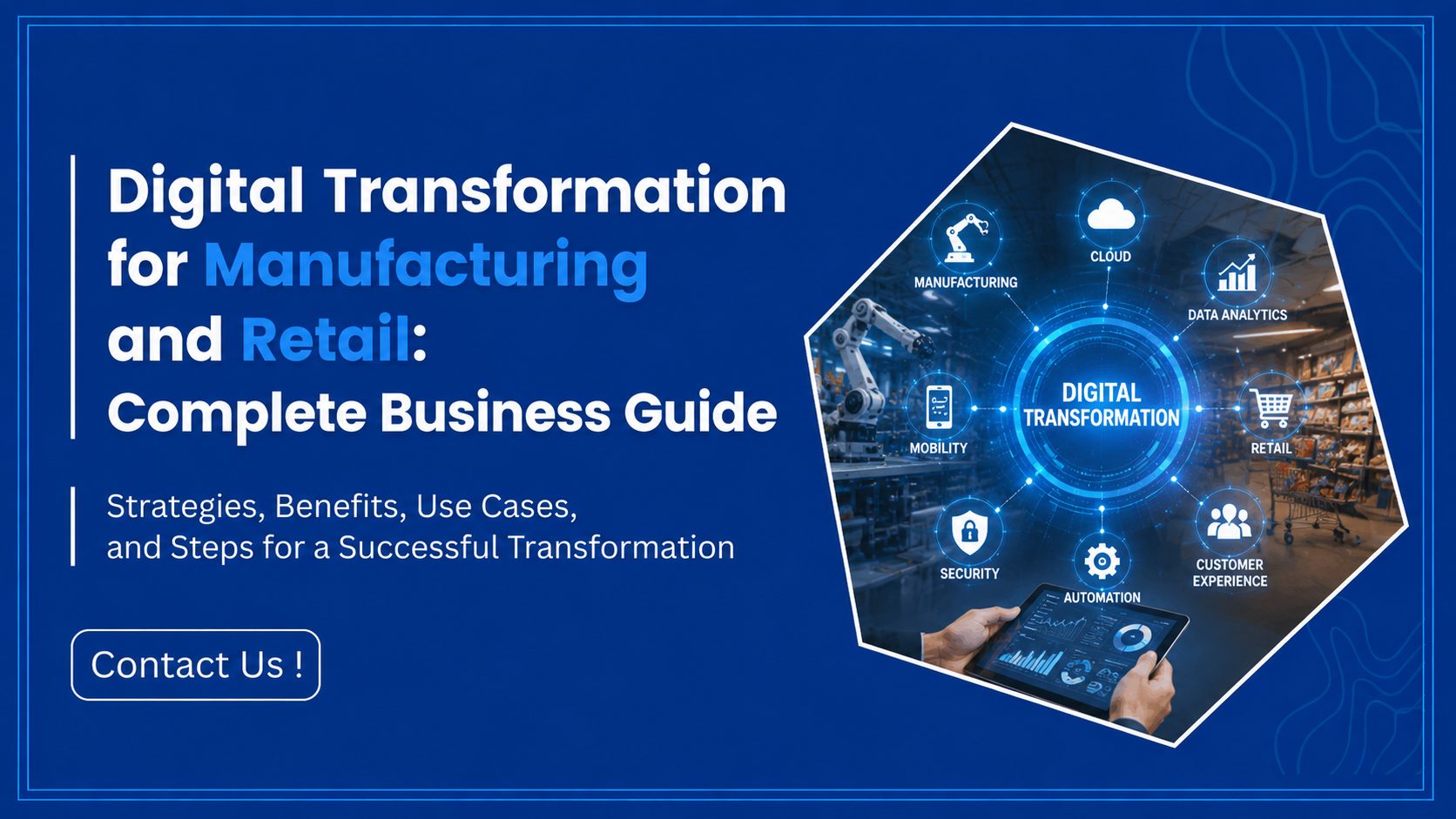
Today, businesses are adopting smarter technologies to streamline operations, improve visibility, automate repetitive tasks, and make faster business decisions. From production floors and warehouses to retail stores and supply chains, digital systems are helping organizations create more connected and efficient business environments.
For manufacturers, digital transformation enables better production planning, operational visibility, and smarter resource management. For retailers, it improves customer experience, inventory accuracy, and omnichannel operations.
At the center of this transformation are ERP systems, automation platforms, analytics tools, and cloud-based technologies that help businesses operate with greater agility and control.
Digital transformation is no longer just about adopting technology; it is about building a business that can adapt, scale, and perform efficiently in a rapidly changing market.
Key Digital Transformation Solutions
Cloud ERP Integration
One of the biggest challenges businesses face is managing operations across multiple disconnected systems. Finance teams use one platform, inventory is tracked somewhere else, and operational data often remains scattered across departments.
Cloud ERP solves this problem by bringing all critical business functions into one centralised system.
Modern ERP platforms help businesses manage:
- Operations
- Inventory
- Procurement
- Finance
- Sales
- Production workflows
From a single platform with real-time visibility.
Unlike traditional systems, cloud ERP provides flexibility, scalability, and remote accessibility making it easier for businesses to grow without operational limitations.
For organizations planning long-term digital growth, ERP becomes the foundation for connected business operations.
Process Automation
Manual operations are one of the biggest causes of inefficiency in both manufacturing and retail.
Tasks like approvals, inventory updates, order processing, reporting, and procurement often consume valuable time and increase the risk of operational errors.
Digital automation helps businesses reduce this dependency on manual coordination.
With the right automation systems, businesses can:
- Streamline operational workflows
- Reduce repetitive tasks
- Improve process accuracy
- Speed up daily operations
- Minimize delays and operational bottlenecks
In manufacturing, automation improves production coordination and process consistency. In retail, it helps businesses process orders faster and manage operations more efficiently across stores and channels.
Data Analytics and Reporting
Businesses today generate huge amounts of operational data but without proper visibility, that data has limited business value.
Digital transformation solutions provide real-time dashboards and analytics tools that help organizations monitor:
- Sales performance
- Production efficiency
- Inventory movement
- Resource utilization
- Customer buying patterns
Instead of relying on assumptions or delayed reports, businesses gain access to real-time insights that support faster and smarter decision-making.
This visibility allows organisations to identify inefficiencies early, improve forecasting, and continuously optimise operations.
Smart Inventory and Supply Chain Management
Inventory and supply chain disruptions can directly impact business performance, customer satisfaction, and profitability.
Modern digital systems help businesses gain real-time visibility across inventory, warehouses, procurement, and logistics operations.
This enables organisations to:
- Track inventory accurately
- Reduce stock mismatches
- Improve demand planning
- Streamline procurement workflows
- Optimize supply chain coordination
For manufacturing and retail businesses operating across multiple locations, centralised inventory and supply chain visibility become critical for maintaining operational continuity.
Customer and Vendor Management
Strong customer and supplier relationships are essential for sustainable business growth.
Digital transformation solutions help businesses improve relationship management by centralizing communication, operational workflows, and transaction history.
Retailers can use customer insights to create more personalized experiences and improve customer retention. Manufacturers can strengthen vendor coordination and improve procurement efficiency through better visibility and communication.
This creates a more connected and responsive business ecosystem.
Security and Compliance Solutions
As businesses digitise operations, security and compliance become increasingly important.
Modern digital systems help organizations:
- Protect operational data
- Control user access
- Maintain audit trails
- Improve compliance management
- Reduce operational risks
This ensures businesses can scale digital operations securely while maintaining regulatory and operational standards.
Benefits of Digital Transformation
Increased Operational Efficiency
Digital systems reduce manual effort, improve coordination between departments, and streamline operational workflows.
This helps businesses operate faster, more efficiently, and with fewer process gaps.
Improved Customer Experience
Faster operations, better product availability, personalised engagement, and smoother workflows contribute directly to better customer experiences.
Better Business Agility
Businesses can respond more quickly to operational changes, customer demands, and market shifts with connected and data-driven systems.
Reduced Operational Costs
Automation and process optimisation reduce inefficiencies, operational delays, and unnecessary manual dependency, leading to better cost control.
Enhanced Data Visibility
Centralised systems provide businesses with accurate and real-time operational insights that improve planning and decision-making.
How Digital Transformation Solutions Work
Business Process Analysis
Every successful digital transformation starts with understanding existing operational challenges.
Businesses first identify:
- Workflow inefficiencies
- Operational bottlenecks
- Data gaps
- Manual dependencies
This helps define where technology can create the highest impact.
Technology Integration and Automation
The next step involves integrating ERP systems, automation tools, inventory platforms, analytics systems, and operational workflows into a connected ecosystem.
The goal is to eliminate disconnected operations and improve process coordination.
Real-Time Monitoring and Reporting
Digital systems provide live operational visibility through dashboards, automated reports, and analytics tools.
Businesses can monitor performance, identify operational issues, and make faster decisions based on real-time information.
Continuous Optimization Strategies
Digital transformation is not a one-time implementation.
Businesses must continuously optimize workflows, improve system usage, and adapt technologies based on changing operational requirements and market conditions.
Step-by-Step Digital Transformation Implementation Guide
Step 1: Identify Business Challenges
Businesses should begin by evaluating operational inefficiencies, process limitations, and scalability challenges.
Clear objectives create a stronger foundation for successful transformation.
Step 2: Select Suitable Technologies
Choosing the right ERP systems, automation tools, and digital platforms is critical for long-term success.
Technology should align with business goals, workflows, and operational requirements.
Step 3: Configure and Integrate Systems
Digital systems should be configured to support existing business processes while improving operational coordination across departments.
Step 4: Train Employees and Stakeholders
Technology adoption depends heavily on people.
Proper employee training ensures smoother transitions, better system usage, and improved operational adoption.
Step 5: Monitor Performance and Scale
Businesses should continuously track system performance, operational improvements, and process efficiency after implementation.
Digital transformation should evolve with business growth.
Best Practices for Successful Digital Transformation
To maximise the impact of digital transformation, businesses should:
- Build a clear implementation roadmap
- Focus on employee adoption and training
- Maintain accurate and structured data
- Continuously improve operational workflows
- Upgrade technologies based on evolving business needs
Technology alone does not drive transformation execution and process alignment matter equally.
Common Challenges and Digital Solutions
Legacy System Limitations
Older systems often lack integration capabilities and operational flexibility.
Modern ERP and automation platforms help businesses transition toward connected digital operations.
Data Silos and Inefficiencies
Disconnected systems create visibility gaps and slow down decision-making.
Integrated digital solutions centralise business data and improve operational coordination.
Operational Delays
Manual approvals, reporting, and workflows slow down business processes.
Automation improves operational speed and reduces dependency on manual intervention.
Security and Compliance Risks
Modern digital systems improve governance, access control, and operational security while supporting compliance management.
Why Choose Indictrans for Digital Transformation?
Digital transformation is not just about implementing software it is about creating systems that support long-term business growth.
At Indictrans, we help manufacturing and retail businesses build scalable, process-driven digital ecosystems aligned with their operational goals.
Our approach focuses on:
- Understanding business workflows
- Implementing customized ERP and automation solutions
- Streamlining operations across departments
- Improving operational visibility and efficiency
- Providing long-term support and optimization
We work closely with businesses to ensure technology delivers measurable operational impact, not just system deployment.
Conclusion
Digital transformation is reshaping how manufacturing and retail businesses operate, compete, and scale.
By integrating ERP systems, automation technologies, analytics, and connected workflows, businesses can improve operational efficiency, enhance visibility, reduce costs, and create more agile operations.
Organizations that invest in digital transformation today are better positioned to adapt to changing business demands and future growth opportunities.
Ready to Accelerate Your Digital Transformation Journey?
If your business is facing operational inefficiencies, disconnected systems, or limited visibility across workflows, it may be time to adopt a smarter digital strategy.
At Indictrans, we help businesses implement scalable ERP and automation solutions designed to support long-term operational growth and digital transformation.
👉 Book a free consultation to assess your current business processes
👉 Explore how digital transformation solutions can streamline your operations and improve business performance