
The UK manufacturing sector is undergoing significant change. Rising operational costs, increasing customer expectations, supply chain uncertainty, sustainability requirements, and growing competition are forcing manufacturers to rethink how they manage their businesses. Many organisations still operate with disconnected systems for finance, inventory, production, procurement, and customer management. While these systems may have worked in the past, they often create inefficiencies that limit growth.
Enterprise Resource Planning (ERP) software helps manufacturers overcome these challenges by bringing critical business functions into a single platform. Instead of relying on spreadsheets and multiple software applications, teams can access real-time information from one source of truth. This improves visibility, supports faster decision-making, and helps businesses operate more efficiently.
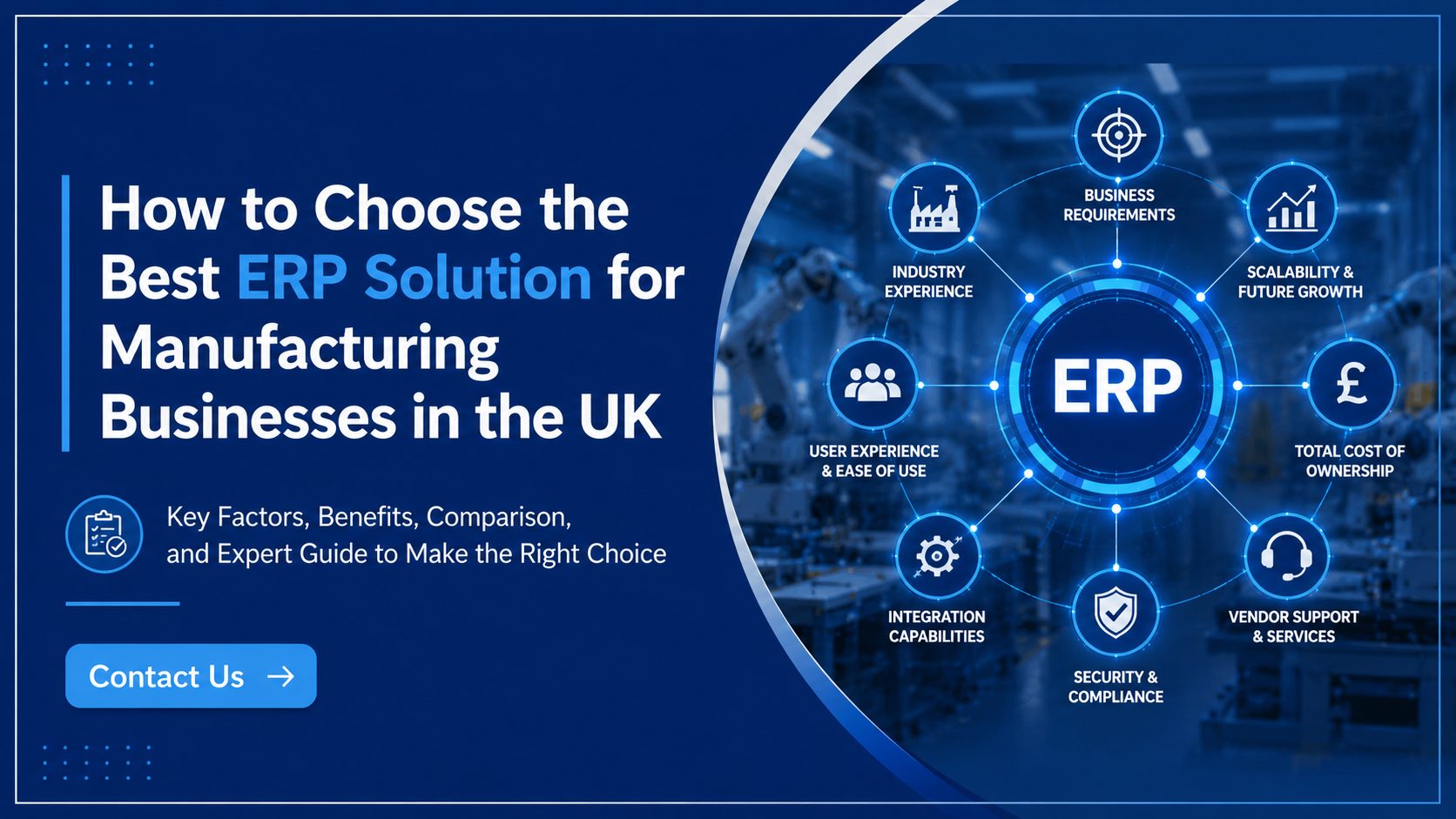
For UK manufacturers evaluating ERP solutions, choosing the right platform can be challenging. The market offers numerous ERP systems, deployment models, pricing structures, and implementation approaches. This guide explains how to assess business requirements, compare ERP options, identify essential features, and select a solution that supports long-term business goals.
Why UK Manufacturers Are Investing in ERP Software
Manufacturing businesses are under constant pressure to improve productivity while controlling costs. Customers expect faster deliveries, suppliers demand better collaboration, and management teams require accurate reporting. Traditional systems often struggle to meet these expectations.
ERP software provides visibility across production, inventory, purchasing, finance, sales, and customer service. It helps businesses reduce manual work, improve planning accuracy, and respond quickly to operational issues. Many manufacturers also view ERP as a foundation for digital transformation, automation, and future growth.
The increasing adoption of cloud technology has made ERP systems more accessible than ever. Businesses can now implement modern ERP platforms without investing heavily in infrastructure, making ERP adoption attractive for both SMEs and large enterprises.
What Is a Manufacturing ERP Solution?
A manufacturing ERP solution is a business management platform specifically designed to support manufacturing operations. It integrates core business processes, including production planning, inventory management, procurement, quality control, finance, customer management, and supply chain operations.
Unlike standalone software applications, ERP systems provide a connected view of the business. Information entered into one area automatically updates across the system, reducing duplication and improving data accuracy.
Manufacturing ERP software often includes industry-specific capabilities such as bill of materials management, material requirements planning, work order management, shop floor control, production scheduling, demand forecasting, and quality management. These capabilities help manufacturers improve operational performance while maintaining control over costs and resources.
Explore the Full Guide
This pillar page links to a series of in-depth cluster articles covering each stage of the ERP selection journey. Use the links below to explore specific topics in detail:
Cluster 1: Signs Your Manufacturing Business Needs ERP Software
Cluster 2: Essential Features to Look for in Manufacturing ERP Software
Cluster 3: Cloud ERP vs Traditional ERP for Manufacturing Companies
Cluster 4: How to Choose & Compare ERP Vendors for Your Manufacturing Business
Cluster 5: Best ERP Systems for SMEs vs Enterprises and Future ERP Trends
Final Thoughts on Choosing the Best ERP Solution for Manufacturing
Choosing the best ERP solution for manufacturing UK business is a strategic decision that can influence operational performance for years to come. The right ERP system helps improve visibility, streamline processes, enhance collaboration, reduce costs, and support sustainable growth.
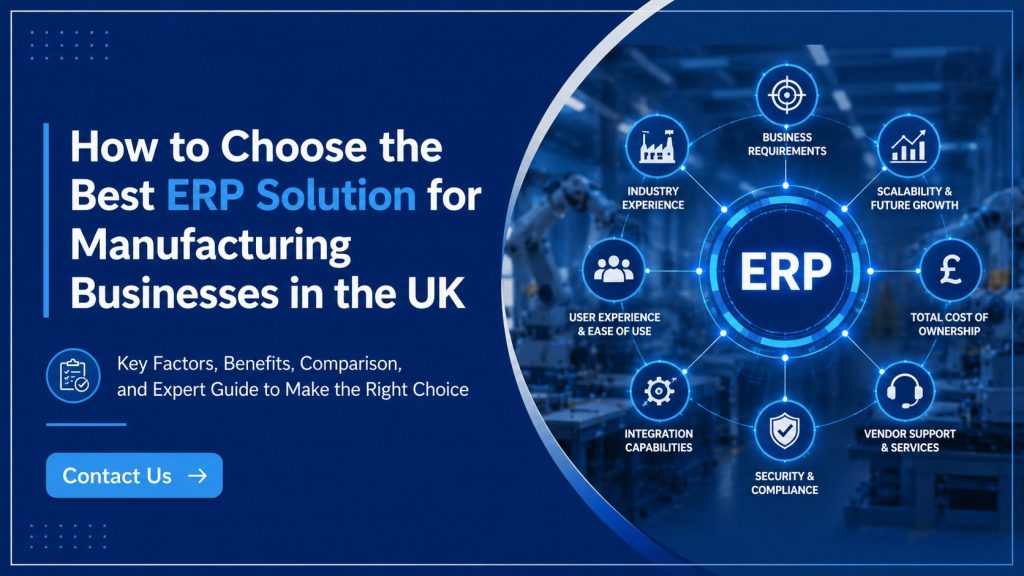
Manufacturers should begin by defining business requirements and identifying operational challenges. They should evaluate ERP systems based on functionality, scalability, deployment options, implementation support, and long-term value.
A successful ERP project is not just about software. It requires strong leadership, stakeholder engagement, effective training, and a clear implementation strategy. Businesses that take a structured approach to ERP selection are more likely to achieve measurable improvements in efficiency, productivity, and profitability.
As digital transformation continues across the manufacturing sector, ERP software will remain a critical foundation for operational excellence and competitive advantage. Investing time in selecting the right solution today can help manufacturers build a stronger, more agile, and more resilient business for the future.